Skip to content
WSP
WSP
  • Who we are
    We are the home of ambitious, passionate, and innovative engineering experts, scientists and advisors.

    Who we are
    • Overview
    • Our history
    • Corporate Responsibility
    • NZ Leadership Team
    • Our impact
    Corporate Responsibility
    • Overview
    • Communities
    • Diversity and Inclusion
    • Ethics and Integrity
    • Health and Safety
    • Sustainability
    Featured content
    thn-wsp-climate-smart-community-dover-trail
    Future Ready ®

    With Future Ready® we see the future more clearly and challenge our teams across the world to advise and design for this future as well as today.

  • What We Do
    We work together with clients to plan, design, create and deliver innovative projects that shape the world.


    View All

    • Sectors
    • Services
    • Projects
    What We Do
    • Overview
    • Property and Buildings
    • Transport
    • Earth and Environment
    • Digital
    • Energy
    • Water
    • Advisory
    • Research
    Property and Buildings
    • Overview
    • Acoustics, Noise and Vibration
    • Architecture
    • Asset Management
    • Building Compliance and BWOF
    • Civil and Cultural
    • Commercial and Mixed Use
    • Education
    • Existing Buildings
    • Green Building Design
    • Healthcare
    • Mechanical, Electrical and Heating, Ventilating and Air Conditioning (HVAC)
    • Mission Critical
    • Property Consultancy
    • Safety, Health and Environment Consultancy Service
    • Structural Engineering
    Transport
    • Overview
    • Asset Management
    • Aviation
    • Bridge Design
    • Landscape and Urban Design
    • Light Rail Transit
    • Maritime
    • Rail Design
    • Road Design
    • Surveying and GIS
    • Transport Planning
    • Tunnel Engineering
    Earth and Environment
    • Overview
    • Contaminated Land
    • Environmental Management
    • Geotechnical and Ground Engineering
    • Landscape and Urban Design
    • Occupational Hygiene
    • Primary Industries
    • Resource Management Planning
    • Sustainability and Climate Change
    Digital
    • Overview
    • Asset Intelligence
    • Building Information Modelling - BIM
    • Data Centres
    • Data Science and Analytics
    • Environmental Intelligence
    • Intelligent Mobility
    • Lifecycle Digital Twins
    • Location Intelligence
    • MMC
    • OT Cybersecurity
    • Smart Places
    • Surveying Mapping and GIS
    Energy
    • Overview
    • Energy Management
    • Energy Storage Facility Operations
    • Hydrogen Energy
    • Hydropower
    • Power Generation and Distribution
    • Solar energy
    • Transmission and Distribution
    Water
    • Overview
    • Climate Adaption and Sustainability
    • Environmental Training Centre
    • Primary Industries
    • Stormwater and Flood Risk Management​
    • Water and Wastewater Conveyance
    • Water and Wastewater Treatment
    Advisory
    • Overview
    • Asset Management Advisory
    • Digital Solutions
    • Energy Advisory
    • Investment and Transaction Advisory
    • Planning, Development and Economics Advisory
    • Sustainability and ESG Solutions
    Research
    • Overview
    • Built Environment
    • Environmental Effects
    • Human Centred Design
    • Instrumentation Monitoring
    • Laboratories
    • Materials Testing and Analysis
    • Research Design
    • Resilience to Hazards
    • Socio-economic Research
    • Wind Tunnel Testing
    Featured content
    thn_web_procurement_advisory
    Human Centred Design

    By adopting a human-centric approach, a new structure or infrastructure –  whether it’s a bridge, playground, park, or reservoir – isn’t simply a physical object consisting of raw materials and labour. Instead, it’s the manifestation of community aspirations. It’s a carefully considered design brought to life. It’s a way to solve underlying issues and make lives better. That’s because human-centric design places people firmly at the heart of projects.

  • Insights
    Our experts offer compelling insights that provide new perspectives.

    Read inspiring articles that challenge the status quo by reframing current issues, sparking fresh conversations and finding new solutions.

    View all
    Insights
    • Overview
    • Climate
    • Mobility
    • Places
    • Resources
    • Society
    • Technology
    Featured content
    WSP and Mahi a Rongo | The Helen Clark Foundation Research

    Driving bold thinking about the future of our communities, WSP has partnered with the Helen Clark Foundation since 2019 to deliver in-depth, evidence-based research reports.

  • Careers
    What if you could do the kind of work the world needs?

    With us, you can. Make your best impact with WSP, where the culture and people also make it the best work of your life.

    Find out more
    Careers
    • Overview
    • Job opportunities
    • Early Career
    • Experienced Professionals
    • Why join us?
    Featured content
    bnr-desktop-hauraki-trail
    Regional Jobs

    Discover the perfect balance of career and lifestyle—live and work in New Zealand’s stunning regions, where rewarding roles at WSP meet breathtaking landscapes, vibrant communities, and a pace of life that lets you thrive.

  • Who we are
    • Overview
    • Our history
    • Corporate Responsibility
      • Who we are
      • Accountable for Tomorrow
        • Overview
        • Communities
        • Diversity and Inclusion
        • Ethics and Integrity
        • Health and Safety
        • Sustainability
    • NZ Leadership Team
    • Our impact
  • What We Do
    • Overview
    • Property and Buildings
      • What We Do
      • Expertise at your service
        • Overview
        • Acoustics, Noise and Vibration
        • Architecture
        • Asset Management
        • Building Compliance and BWOF
        • Civil and Cultural
        • Commercial and Mixed Use
        • Education
        • Existing Buildings
        • Green Building Design
        • Healthcare
        • Mechanical, Electrical and Heating, Ventilating and Air Conditioning (HVAC)
        • Mission Critical
        • Property Consultancy
        • Safety, Health and Environment Consultancy Service
        • Structural Engineering
    • Transport
      • What We Do
      • Expertise at your service
        • Overview
        • Asset Management
        • Aviation
        • Bridge Design
        • Landscape and Urban Design
        • Light Rail Transit
        • Maritime
        • Rail Design
        • Road Design
        • Surveying and GIS
        • Transport Planning
        • Tunnel Engineering
    • Earth and Environment
      • What We Do
      • Expertise at your service
        • Overview
        • Contaminated Land
        • Environmental Management
        • Geotechnical and Ground Engineering
        • Landscape and Urban Design
        • Occupational Hygiene
        • Primary Industries
        • Resource Management Planning
        • Sustainability and Climate Change
    • Digital
      • What We Do
      • Expertise at your service
        • Overview
        • Asset Intelligence
        • Building Information Modelling - BIM
        • Data Centres
        • Data Science and Analytics
        • Environmental Intelligence
        • Intelligent Mobility
        • Lifecycle Digital Twins
        • Location Intelligence
        • MMC
        • OT Cybersecurity
        • Smart Places
        • Surveying Mapping and GIS
    • Energy
      • What We Do
      • Expertise at your service
        • Overview
        • Energy Management
        • Energy Storage Facility Operations
        • Hydrogen Energy
        • Hydropower
        • Power Generation and Distribution
        • Solar energy
        • Transmission and Distribution
    • Water
      • What We Do
      • Expertise at your service
        • Overview
        • Climate Adaption and Sustainability
        • Environmental Training Centre
        • Primary Industries
        • Stormwater and Flood Risk Management​
        • Water and Wastewater Conveyance
        • Water and Wastewater Treatment
    • Advisory
      • What We Do
      • Expertise at your service
        • Overview
        • Asset Management Advisory
        • Digital Solutions
        • Energy Advisory
        • Investment and Transaction Advisory
        • Planning, Development and Economics Advisory
        • Sustainability and ESG Solutions
    • Research
      • What We Do
      • Expertise at your service
        • Overview
        • Built Environment
        • Environmental Effects
        • Human Centred Design
        • Instrumentation Monitoring
        • Laboratories
        • Materials Testing and Analysis
        • Research Design
        • Resilience to Hazards
        • Socio-economic Research
        • Wind Tunnel Testing
  • Insights
    • Overview
    • Climate
    • Mobility
    • Places
    • Resources
    • Society
    • Technology
  • Careers
    • Overview
    • Job opportunities
    • Early Career
    • Experienced Professionals
    • Why join us?
Select your language and location

We are locally dedicated with international scale.

International
  • Global
    English — Français
Americas
  • Canada
    English — Français
  • Latin America
    Español — Português
  • United States
    English
Africa
  • South Africa
    English
Asia
  • China
    中文(简体) — English
  • Hong Kong
    English
  • India
    English
  • Indonesia
    English
  • Malaysia
    English
  • Philippines
    English
  • Singapore
    English
  • South Korea
    한국어(대한민국) — English
  • Thailand
    English
Europe
  • Denmark
    Dansk
  • Finland
    Suomi
  • France
    Français
  • Germany
    Deutsch
  • Hungary
    English
  • Italy
    Italiano
  • Netherlands
    Nederlands
  • Norway
    Norsk
  • Poland
    Polski
  • Romania
    English
  • Spain
    Español
  • Sweden
    Svenska
  • Switzerland
    Deutsch — Français
  • Turkey
    Turkish
  • United Kingdom
    English
Middle East
  • Middle East
    English
Oceania
  • Australia
    English
  • New Zealand
    English
Worldwide offices
    • Investors
    • Investors
    • News
    • Contact us
    • Investors
    • Investors
    • News
    • Contact us
  1. We are WSP
  2. Insights

Building resilience in an age of change

A host of challenges are forcing engineers to reflect on different and more holistic ways of achieving resilience in the built environment. WSP national technical leader Brabhaharan investigates how best we can construct the next generation of functional structures.
map marker New Zealand | Wednesday, 11 May 2022
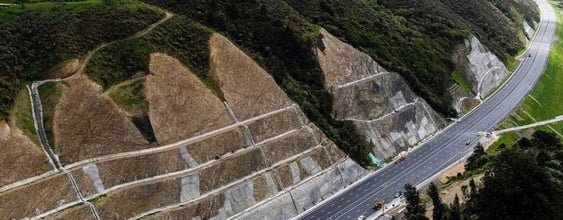
New-Transmission-Gully-Expressway---photo-credit---Wellington-Gateway-Partnership

New Transmission Gully Expressway - photo credit - Wellington Gateway Partnership

1 / 3
SH1-and-rail-link-closed-by-large-landslide-in-the-2016-Kaikoura-earthquake

SH1 and rail link closed by large landslide in the 2016 Kaikoura earthquake

2 / 3
FerrymeadBridgefromabovebeforeitsopeningPhotocreditBeckerFraserPhotos

Ferrymead Bridge from above before its opening. Photo credit - Becker Fraser Photos

3 / 3
Previous Next

With some of the best brains in the business and access to the latest technology, Aotearoa New Zealand’s engineers do a first-rate job of building safe structures. But the engineering community is facing a perfect storm of challenges, including raising the seismic performance of the country's built environment and designing for more extreme weather events.

Throw into the mix the pressing need to design with lower-carbon materials and supply chain pressures from COVID-19 and it can be hard to know where to start in designs that are resilient enough to take the knocks and can bounce back from whatever nature throws at them.

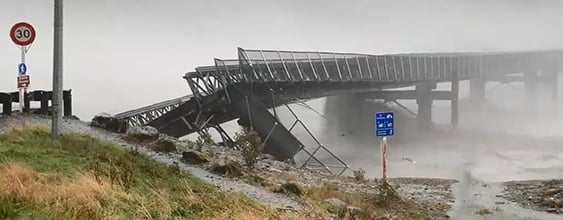
We don’t need to look far to see how disruptive natural events can be for people and society. After the 2016 Kaikōura Earthquake, parts of State Highway One and the Main Trunk Line were closed for months by landslides. Recent storms at the top of the South Island and elsewhere around the country caused significant loss of functionality to much infrastructure.

As engineers, we must build functional, resilient structures that can survive the effects of these kinds of events - while keeping a close eye on carbon inputs so as not to make the problem even worse for future generations.


Site right

Sensible land use planning has a vital role to play in building resilience. Hazardous areas should be zoned for low intensity land use, while low risk areas should be selected for high intensity land use, including housing, and critical energy, water and telecommunications infrastructure.

Unfortunately, we don’t always seem to get this right. Much of our built environment is still being sited in areas that are highly susceptible to a range of hazards – from liquefaction and flooding to coastal inundation and sea level rise.

In an example of what good looks like, Blenheim recently decided to extend to less hazardous areas to the North and West of the township. Growing to the more vulnerable South-East would have meant more expensive (and carbon intensive) groundworks. Making this decision came at no extra cost and demonstrates the long-term value of planning for hazards.

In another example, a recent apartment project undertaken by WSP saw the building positioned well away from current and old stream beds. The more hazardous ground prone to damage was used for parking. In this way, greater resilience was achieved – in fact, the client was able to save on foundation costs and reduce the structure’s embodied carbon.


Form and function

Designing building forms that fit within the context of local hazards is one of the most important things we can do when thinking about resilience and getting things back up and running after catastrophic natural events.

Doing this early lets us select design approaches that are resilient, low carbon and economic. But leave it too late, and we’ll just have to throw more cost and carbon at the problem - and still not achieve the resilience needed.

Canterbury’s new Ferrymead Bridge is a great example of how focussing on form can enhance a structure’s resilience. It’s been designed with a pier in the middle of the river – well away from the riverbanks – and features slender piles that reduce the effects of ground movement. The bridge can be quickly restored to provide temporary access if another major seismic event rocks the region.

Resilience in this context is our ability to continue to function - or return to functionality quickly. It’s a hallmark of the Remutaka Hill alignment North of Wellington. Early plans featured bridges, but embankments able to cope with ground displacement and rock cuttings ended up being the centrepiece of the design. In this way, the project team achieved enhanced resilience, reduced the amount of concrete and steel used and made serious dollar savings.

Similarly, flexible and easily restorable embankments have been adopted on the just-opened Transmission Gully Expressway to enable rapid reopening if the Ohariu Fault that crosses it was to rupture.

In thinking about resilience, it’s important to understand that not everything can (or should) be designed to be 100 percent bullet proof. Focusing our energies on critical facilities that are essential to the functioning of society should be the priority. Areas of the built environment where we can accept a level of damage – such as parks and gardens – aren't so important and can be repaired over time.


Putting it all together

Taking a more holistic approach to resilience that’s sensitive to decarbonisation, climate change and seismic impacts will require a 360° change in mindset. Location, form and focus on functionality needs to be topmost in mind.

The best place to start is to have all construction industry disciplines work closer together with a common goal of achieving greater resilience and sustainability from the outset. Without taking this integrated focus, projects won’t be able to deliver the change needed.

The big question is will we get serious as an industry about making this paradigm shift? I certainly hope so. As a hedge against the impacts of adverse shocks and our climate future, it's more necessary than ever.


More on this subject

thn-kim-ferguson-Environment-Analyst

October 2026 | 5 minutes

WSP on contaminated land and managing the aftermath of mining

svg-icon Feature
Resilience , Resources
THB - climate resilience

September 2026

What climate resilience means in practice

New Zealand
svg-icon Helen Clark Foundation
Climate , Resilience , Society , Technology
thn_harnessing_matauranga_maori_insights

September 2026

What iwi knowledge can teach us about regional connectivity

New Zealand
svg-icon Helen Clark Foundation
Places , Resilience , Society , Climate
Thn-Web-Article-VV-Kat-v2

July 2026

The anatomy of a powerful vision

svg-icon Feature
Resilience , Technology
thn-green-buildings

July 2026 | 5 minutes

Bringing central business districts back to life

svg-icon Feature
Decarbonization , Places , Resilience
Thn-Web-VV-Matt

June 2026

Nature Paves the Way: Can Pine Trees Shape the Future of Sustainable Road Infrastructure?

New Zealand
svg-icon Feature
Resilience , Resources , Mobility , Decarbonization
CS2026_4218_Energy Image_Thumbnail

May 2026

Aotearoa New Zealand’s energy turning point

New Zealand
svg-icon Feature
Climate , Energy Transition , Technology
thn-leed-v5

March 2026 | 2:08 minutes

LEED v5 Explained: Three Changes Building Owners Should Understand

United States
svg-icon Feature
Decarbonization , Resilience , Places
CE2-Article-Thumbnail

March 2026

The Circular Future of Airports

svg-icon Feature
Mobility , Resilience
thn-beauty-buildings

February 2026 | 4 minutes

Finding the beauty in ugly buildings

svg-icon Feature
Places , Decarbonization , Climate , Society
thn-the-Reliability-Roadmap-Powering-Today-Preparing-for-Tomorrow

February 2026 | 1 minute

The Reliability Roadmap: Powering Today, Preparing for Tomorrow

United States
svg-icon Feature
Resilience , Energy Transition
TARPS THB

January 2026

Evolution of TARPs in infrastructure risk management

New Zealand
svg-icon Feature
Climate , Resilience , Technology

Author

img_profile_Brabha1
Brabha
Technical Director Geotechnical Engineering, Tunnels and Resilience
New Zealand
See more

Share this page

  • Share on Facebook - Warning, this link will open a new tab.
  • Share on Linkedin - Warning, this link will open a new tab.
  • Share on Twitter - Warning, this link will open a new tab.
  • Share on Skype - Warning, this link will open your Skype application.

Related themes and tags

  • Resilience (248)

  • Climate (198)


  • Buildings (129)
  •   Page will open in a new tab
  •   Page will open in a new tab
  •   Page will open in a new tab
  •   Page will open in a new tab
  •   Page will open in a new tab
  • Who We Are
  • Our history
  • Future Ready
  • New Zealand Leadership
  • Global Leadership
  • Our offices
  • What We Do
  • Sectors
  • Services
  • Projects
  • Insights
  • Climate
  • Mobility
  • Places
  • Society
  • Resilience
  • Technology
  • Careers
  • Join Our Team
  • Holiday Act Remediation for Former Employee
  • Early career
  • Experienced professionals
  • Why join us?
  • Corporate
  • Sustainability
  • Health and Safety
  • Investors
  • Business Conduct Hotline
  • News
  • Ethics and Integrity
  • Engineer in Safety
    ©2026 WSP
    • The WSP Logo
    • Privacy Policy
    • Anti-Spam Commitment
    • Cookie Notice
    • Terms of Use
    • AI statement
    ©2026 WSP
    Exiting our Website

    You are about to leave WSP.com and are being redirected to a job opportunity at Louis Berger, which has been recently acquired by WSP in the US.