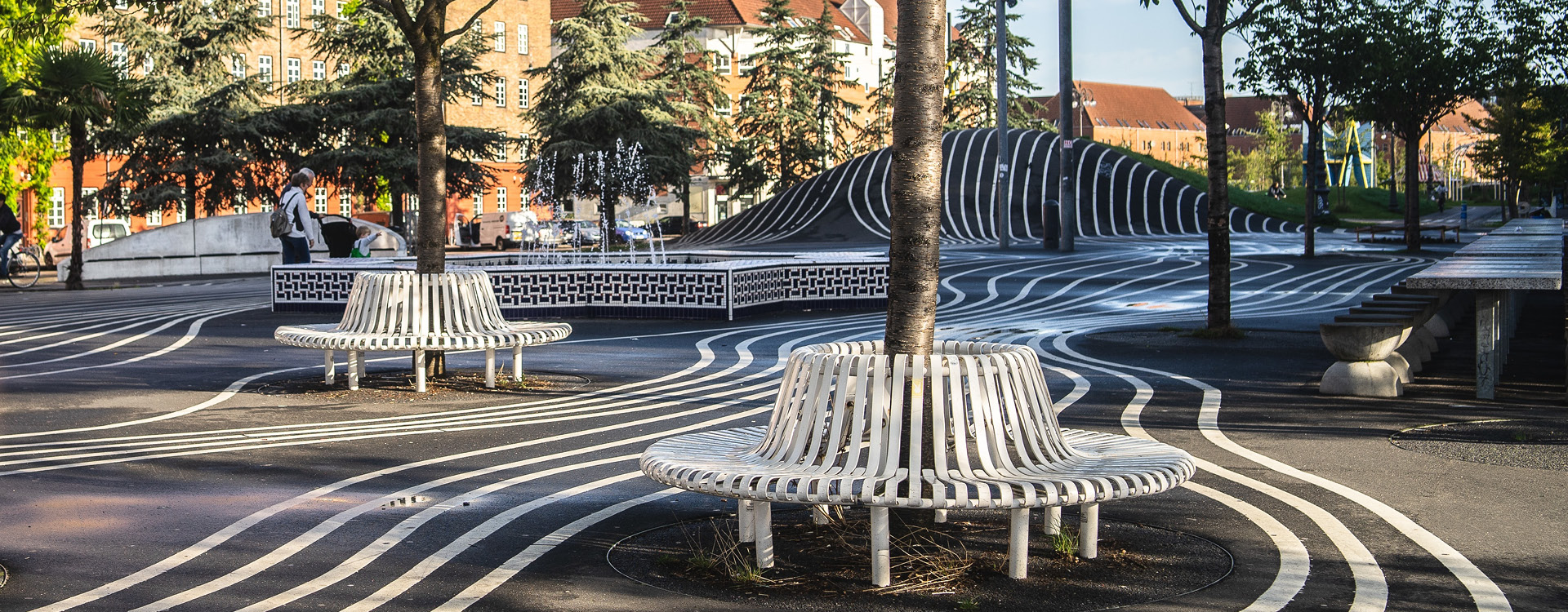
At the heart of Superkilen’s reimagining is an urban design approach called placemaking - where public places are co-created in a way that reflects the identity of the communities they serve. In this way, enduring meaning and belonging is established.
Superkilen illustrates the transformative power of placemaking, urban renewal, and public art. It's located in the city's Nørrebro neighbourhood, where crime rates are higher than in wider Copenhagen.
While perceptions of crime in the Superkilen area have been perceived as high, they’re lower than in other parts of Nørrebro. Reports suggest that vandalism and antisocial behaviour hasn’t been much of an issue in the park since it opened. In fact, the park has helped rejuvenate a problematic area
The aim with Superkilen was to create a public space where people from diverse backgrounds could meet, interact, and feel at home. It’s achieved all that, and more – having gained an impressive reputation for how deeply the local community was involved in its design. The co-design stage of the project was an example of what the planners and designers called extreme participation.
Divided into three areas – Red Square, Black Square, and Green Park – Superkilen covers 30,000 square metres. It features 150 elements and objects proposed by over 60 nationalities living in the area - including an Indian playground, Moroccan fountain, Palestinian soil, Bulgarian chess tables, benches from all four corners of the globe, and plenty more. Thanks to the bringing together of these objects, Superkilen developed greater social cohesion and increased feelings of being safe.
Colour, landscaping, lighting and material selection have all played an important role in Superkilen’s success. But there’s been another reason for its positive social impact. When communities are invested in places that they’ve had a hand in creating, vibrancy and lower crime rates are usually the result especially when they’ve been designed to Crime Prevention Through Environmental Design (CPTED) principles.
Co-design creates a feeling of stewardship over a place, which leads to community creation and, in turn, decreased crime rates. From introducing community gardens and living walls to painting murals and re-making thoroughfares to be more people-friendly, the creation of great urban places that bring people together and help reduce the incidence of crime is happening around the world. Homegrown examples can be found here in Aotearoa New Zealand.
Since Wellington began revitalising its laneways the Police have reported positive changes to inner city behaviour.And after Christchurch’s bus interchange was redesigned with CPTED principles, statistics showed a drop in crime
Auckland’s Te Ara Whiti Lightpath and Christchurch’s Margaret Mahy Playground are other fine examples of how smart, participatory urban design treatments can bring communities together, breed neighbourhood vibrancy, and increase feelings of safety, security, and collective ownership.
The future of our communities depends on public places like these that boost energy and activity, strengthen bonds between people and foster a sense of pride and belonging – along the way helping transform precincts into safer, more lively places to be. It’s heartening to observe. Let’s do all we can to enable even more.