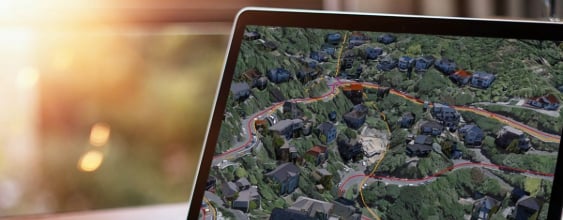
and associated carbon emissions, utilizing an automated process to feed information into the Infrastructure Sustainability Council of Australia [ISCA] materials calculator. ISCA is an industry-led system used to deliver sustainability performance by benchmarking key metrics across a project’s life cycle. We then report the calculation through a Microsoft Power BI dashboard, which is a digital canvas allowing insights into the underlying database through various visualizations and graphs. We share data across multiple cloud-based platforms on a weekly basis and have an automated quality assurance process in place to validate the digitalmodels. This structured metadata also allows the digital twin models to include cost centres, thereby bridging the gap between design and construction reporting.
The transparent way in which we share information across the alliance has made this process both possible and viable. All stakeholders are engaged and informed; designers, constructors and management can stay focused on the carbon “bottom line.”
How does the alliance contracting model support efforts toward meeting the project’s embodied-carbon reduction target?
Dean Burke: The structure that the alliance contracting model puts in place—shared risk and reward across all parties—enables a highly collaborative environment. We rely on each other and proactively solve problems as a team across all parts of the project. This highly innovative and interactive environment allows the undertaking of processes which traditionally would not have been achievable; we collaboratively address everything from document control and construction methodologies to maintaining the data-and-asset-rich digital twin models. These digital twin models ensure close monitoring and feedback so that continued embodied carbon reduction can be realized on a real-time basis.
With the increasing use of digital twins in transport and infrastructure projects, where do you see opportunity to further support sustainability?
Dean Burke: Digital twins can be used to assess and improve sustainability performance through life cycle assessment (LCA) across a wide spectrum of areas, such as water use, waste output, and impacts on ecology. Broader application could also cover social, cultural and economic metrics—for example, creating a more inclusive and affordable transport system. Together, these measures will enable enhanced holistic approaches to support sustainability and develop a resilient infrastructure system that falls within planetary-health boundaries.
The integration of sustainability measures during the early planning and design phases of projects is essential to reveal potential opportunities and enhance performance. We expect to see fully integrated live metrics across the entire life cycle of an asset. This lifecycle perspective extends beyond design, construction, maintenance and operation, to the end-of-life stage—how assets, materials and components are re-purposed throughout the built environment. There are no barriers to applying digital twin technology to advance sustainability today, and we’re excited about achieving even greater positive impact.
About
Bringing together practical experience with a technical approach, Dean has progressed from the tools to his current position as Digital Engineering Lead. Continually innovating and improving the BIM process for a smarter more efficient deliverable for Client, Consultant and Contractor alike.