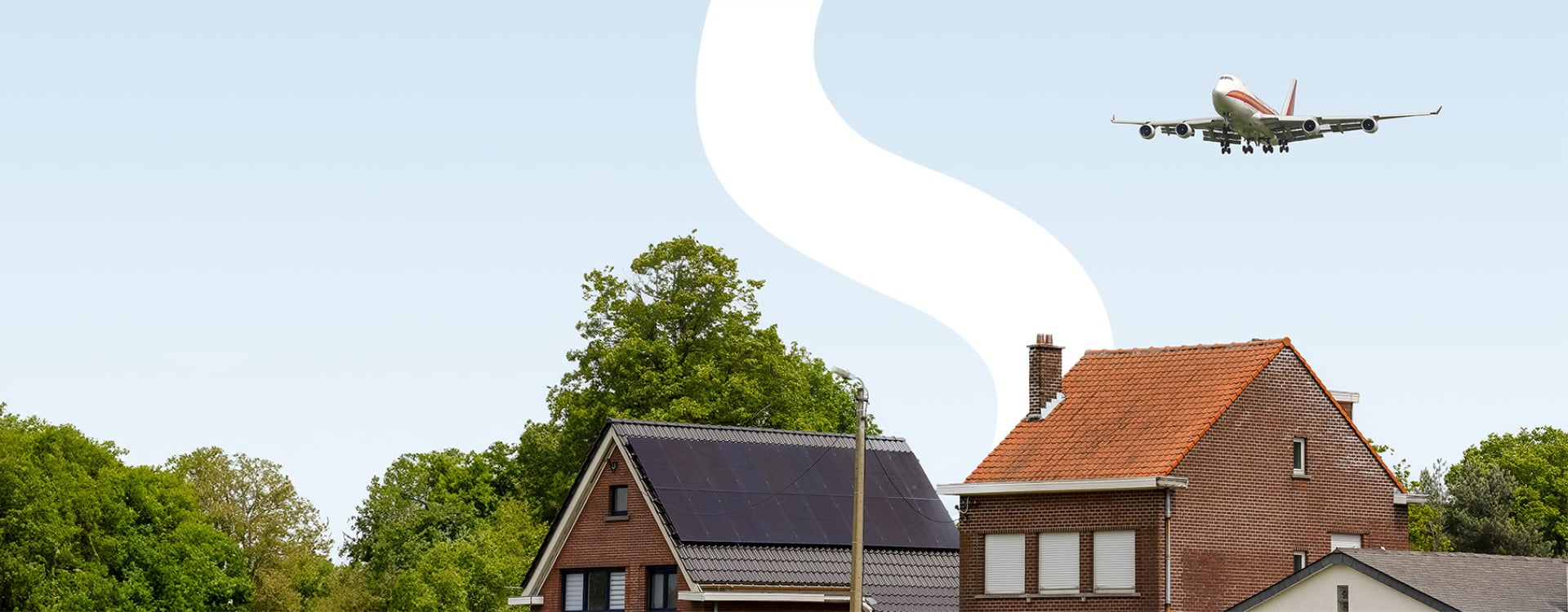
Historically, airports have been developed near towns or cities but have been separated by distance to control the impact of noise. But as the demand for housing increases, new noise-sensitive developments (residential, schools, hospitals, etc.) then encroach on land which separates airports from towns or cities.
More people in close proximity to airports means the potential for more complaints about the noise associated with aircraft and airports.
The impacts on noise sensitive receptors (areas where people are more susceptible to the adverse effects of noise pollution) can include annoyance from aircraft due to disruption of day-to-day activities and lowered amenity (such as needing to turn the TV up to hear, or conversations outdoors being cut-off). Airports are also impacted where noise sensitive receptors move closer to the airport. This usually generates more complaints and can restrict activities.
So, what is being done to minimise the impacts of noise near airports and protecting airport operations from expanding towns and cities?
Protecting the People
There are many ways in which noise from airports is controlled to provide the best practicable environment for people to live near an airport. These include:
- Continually reviewing how aircraft are arriving and departing to minimise noise. This includes the approach paths, and timing when flaps are extended, and wheels come out during arrivals.
- Using flight paths that avoid as many receptors as practicable, while still being within the requirements of flight profiles.
- Minimising the number of flights which occur at most-sensitive times (i.e. during night time when people are trying to sleep).
- Positioning airports away from sensitive noise receptors through land management consideration.
Protecting the Airport
So as not to limit the efficient and effective operation of an airport, several measures can be taken to help protect the operation of airports:
- Requiring building envelope upgrades so that noise is reduced from outside to inside more effectively.
- Restricting development to the least sensitive areas, so that people aren’t trying to live right under where aircraft are trying to land.
- Flying at times where the least noise disturbances occur (i.e. during the day).
- Providing initiatives for aircraft operators to use quieter aircraft. This can include penalties for aircraft which generate too much noise or benefits for upgrading fleets to quieter aircraft.
With airport noise, clear communication is essential for ensuring that any changes made are effectively conveyed and understood by the public.