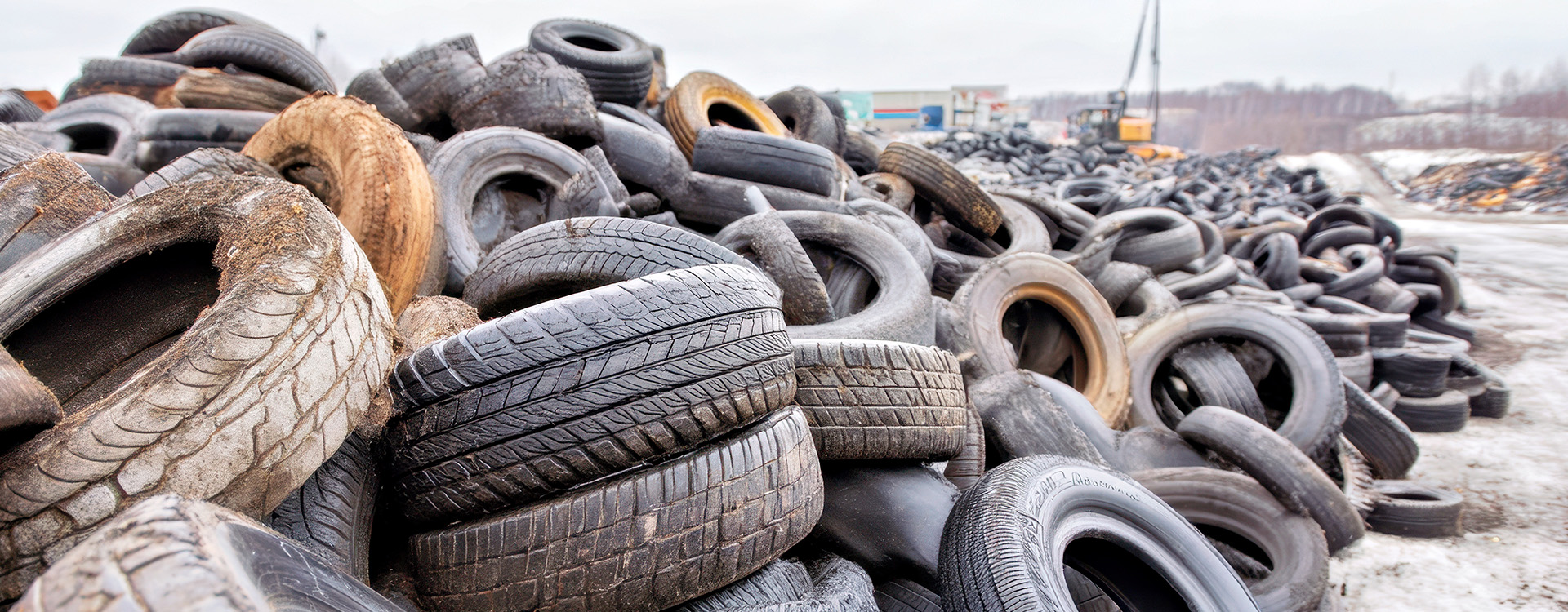
Every so often, stockpiles of waste tyres hit the headlines for all the wrong reasons. The Amberley tyre fire of 2021 was a sad case in point, where 160,000 old tyres were deliberately torched. Toxic plumes of black smoke billowed high in scenes more reminiscent of a war zone.
Jeremy says events like these symbolise the enormity of New Zealand's tyre disposal challenge. As well as the ever-present risk of catching alight, chemicals and heavy metals in stockpiled tyres can leach into soil and groundwater.
“It's a mountain of a problem, with very real environmental and human health implications.”
New Zealand exports some end-of-life-tyres. But as we saw a few years ago with China’s National Sword policy on plastics, overseas markets are moving away from importing other countries’ waste. They don't want them adding to their own confronting waste management issues. So, what do we do with our growing mountains of waste tyres?
Jeremy says the answer is a work in progress and will involve no small amount of strategy, science, and savvy. But the status quo, he adds, isn't all bad. Currently, some re-processed waste regulated tyres are used in New Zealand in playground surfacing, permeable paving, horse arenas, and artificial turfs. Plus, Golden Bay Cement in Whangārei is using them as a source of fuel in their cement manufacturing process.
Tyrewise, a newly launched, regulated stewardship scheme for end-of-life-tyres is playing a big part in more of this kind of solutions thinking. Overseen by the Ministry for the Environment and funded by a stewardship fee on tyre imports, the scheme is promoting and exploring other potential end use applications for waste tyres. These include recycling for use in moulded rubber products such as gym and farmyard matting.
“A lot of the time these products use the exact same rubber found in tyres, but it's cheaper to import this rubber from overseas. We should ask ourselves why we are using these products when we clearly have an abundance of the resource in New Zealand. The challenge for Tyrewise and NZ Inc is to look in our backyard and investigate products or markets we can encourage to use locally recycled rubber material,” says Jeremy.
Jeremy, who sits on the steering group for Tyrewise, says the scheme is part of a national vision to support a circular economy. Success could position New Zealand as a model for sustainably managing other waste streams.
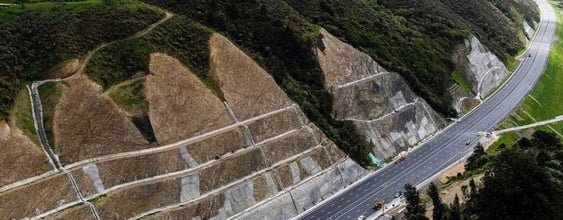
A promising potential application can be found in the roading realm. While there are technical and chemical engineering challenges, the crux of this recycling solution is to grind up old tyres and use the little chunks of rubber as a partial replacement for roading aggregate or in bitumen. This has been done in Europe, with New Zealand running trials in the late 1980s and early 1990s.
From literature reviews to lab studies and field trials, WSP has long worked with the NZ Transport Agency Waka Kotahi (NZTA) on research and development for end-of-life-tyres in roading applications.
Technically, the big research question is how to best harness properties of tyre rubber, says Jeremy - especially when it comes to using it as a bitumen modifier.
“Some of the research that WSP has been doing is to look at devulcanisation, which breaks down chemical links within tyre rubber so it can be used in roading chip seal or to manufacture other rubber products. We see a huge potential for this type of technology in New Zealand.”
Jeremy says many of WSP's recent reports for NZTA focus on barriers to re-use of end-of-life-tyres and how these can be addressed. He likens the biggest of these to a “chicken and egg situation around security of supply”.
“One of the challenges for the roading industry to commit to any re-use of tyres is the investment required in capital and resources when there is no security of supply of end-of-life tyre materials.”
He wants to see onshore processing capability ramp up. And that, “hopefully, in time, with planning, the roading contracting industry will be able to see its direct benefit.”
Jeremy says Tyrewise is actively working with its counterparts in Australia and is looking to North America and Europe for inspiration as “several countries are several decades ahead of us with systems and viable applications for re-using waste tyres”.
His hope for the future is three-fold: that Tyrewise's work demonstrates that the circular economy can work in New Zealand for waste tyres; that it sparks similar approaches across other regulated and non-regulated waste streams; and that, ultimately, articles about stockpiles of end-of-life-tyres never again make the headlines.