Skip to content
WSP
WSP
  • Who we are
    We are the home of ambitious, passionate, and innovative engineering experts, scientists and advisors.

    Who we are
    • Overview
    • Our history
    • Corporate Responsibility
    • NZ Leadership Team
    • Our impact
    Corporate Responsibility
    • Overview
    • Communities
    • Diversity and Inclusion
    • Ethics and Integrity
    • Health and Safety
    • Sustainability
    Featured content
    thn-wsp-climate-smart-community-dover-trail
    Future Ready ®

    With Future Ready® we see the future more clearly and challenge our teams across the world to advise and design for this future as well as today.

  • What We Do
    We work together with clients to plan, design, create and deliver innovative projects that shape the world.


    View All

    • Sectors
    • Services
    • Projects
    What We Do
    • Overview
    • Property and Buildings
    • Transport
    • Earth and Environment
    • Digital
    • Energy
    • Water
    • Advisory
    • Research
    Property and Buildings
    • Overview
    • Acoustics, Noise and Vibration
    • Architecture
    • Asset Management
    • Building Compliance and BWOF
    • Civil and Cultural
    • Commercial and Mixed Use
    • Education
    • Existing Buildings
    • Green Building Design
    • Healthcare
    • Mechanical, Electrical and Heating, Ventilating and Air Conditioning (HVAC)
    • Mission Critical
    • Property Consultancy
    • Safety, Health and Environment Consultancy Service
    • Structural Engineering
    Transport
    • Overview
    • Asset Management
    • Aviation
    • Bridge Design
    • Landscape and Urban Design
    • Light Rail Transit
    • Maritime
    • Rail Design
    • Road Design
    • Surveying and GIS
    • Transport Planning
    • Tunnel Engineering
    Earth and Environment
    • Overview
    • Contaminated Land
    • Environmental Management
    • Geotechnical and Ground Engineering
    • Landscape and Urban Design
    • Occupational Hygiene
    • Primary Industries
    • Resource Management Planning
    • Sustainability and Climate Change
    Digital
    • Overview
    • Asset Intelligence
    • Building Information Modelling - BIM
    • Data Centres
    • Data Science and Analytics
    • Environmental Intelligence
    • Intelligent Mobility
    • Lifecycle Digital Twins
    • Location Intelligence
    • MMC
    • OT Cybersecurity
    • Smart Places
    • Surveying Mapping and GIS
    Energy
    • Overview
    • Energy Management
    • Energy Storage Facility Operations
    • Hydrogen Energy
    • Hydropower
    • Power Generation and Distribution
    • Solar energy
    • Transmission and Distribution
    Water
    • Overview
    • Climate Adaption and Sustainability
    • Environmental Training Centre
    • Primary Industries
    • Stormwater and Flood Risk Management​
    • Water and Wastewater Conveyance
    • Water and Wastewater Treatment
    Advisory
    • Overview
    • Asset Management Advisory
    • Digital Solutions
    • Energy Advisory
    • Investment and Transaction Advisory
    • Planning, Development and Economics Advisory
    • Sustainability and ESG Solutions
    Research
    • Overview
    • Built Environment
    • Environmental Effects
    • Human Centred Design
    • Instrumentation Monitoring
    • Laboratories
    • Materials Testing and Analysis
    • Research Design
    • Resilience to Hazards
    • Socio-economic Research
    • Wind Tunnel Testing
    Featured content
    thn_web_procurement_advisory
    Human Centred Design

    By adopting a human-centric approach, a new structure or infrastructure –  whether it’s a bridge, playground, park, or reservoir – isn’t simply a physical object consisting of raw materials and labour. Instead, it’s the manifestation of community aspirations. It’s a carefully considered design brought to life. It’s a way to solve underlying issues and make lives better. That’s because human-centric design places people firmly at the heart of projects.

  • Insights
    Our experts offer compelling insights that provide new perspectives.

    Read inspiring articles that challenge the status quo by reframing current issues, sparking fresh conversations and finding new solutions.

    View all
    Insights
    • Overview
    • Climate
    • Mobility
    • Places
    • Resources
    • Society
    • Technology
    Featured content
    WSP and Mahi a Rongo | The Helen Clark Foundation Research

    Driving bold thinking about the future of our communities, WSP has partnered with the Helen Clark Foundation since 2019 to deliver in-depth, evidence-based research reports.

  • Careers
    What if you could do the kind of work the world needs?

    With us, you can. Make your best impact with WSP, where the culture and people also make it the best work of your life.

    Find out more
    Careers
    • Overview
    • Job opportunities
    • Early Career
    • Experienced Professionals
    • Why join us?
    Featured content
    bnr-desktop-hauraki-trail
    Regional Jobs

    Discover the perfect balance of career and lifestyle—live and work in New Zealand’s stunning regions, where rewarding roles at WSP meet breathtaking landscapes, vibrant communities, and a pace of life that lets you thrive.

  • Who we are
    • Overview
    • Our history
    • Corporate Responsibility
      • Who we are
      • Accountable for Tomorrow
        • Overview
        • Communities
        • Diversity and Inclusion
        • Ethics and Integrity
        • Health and Safety
        • Sustainability
    • NZ Leadership Team
    • Our impact
  • What We Do
    • Overview
    • Property and Buildings
      • What We Do
      • Expertise at your service
        • Overview
        • Acoustics, Noise and Vibration
        • Architecture
        • Asset Management
        • Building Compliance and BWOF
        • Civil and Cultural
        • Commercial and Mixed Use
        • Education
        • Existing Buildings
        • Green Building Design
        • Healthcare
        • Mechanical, Electrical and Heating, Ventilating and Air Conditioning (HVAC)
        • Mission Critical
        • Property Consultancy
        • Safety, Health and Environment Consultancy Service
        • Structural Engineering
    • Transport
      • What We Do
      • Expertise at your service
        • Overview
        • Asset Management
        • Aviation
        • Bridge Design
        • Landscape and Urban Design
        • Light Rail Transit
        • Maritime
        • Rail Design
        • Road Design
        • Surveying and GIS
        • Transport Planning
        • Tunnel Engineering
    • Earth and Environment
      • What We Do
      • Expertise at your service
        • Overview
        • Contaminated Land
        • Environmental Management
        • Geotechnical and Ground Engineering
        • Landscape and Urban Design
        • Occupational Hygiene
        • Primary Industries
        • Resource Management Planning
        • Sustainability and Climate Change
    • Digital
      • What We Do
      • Expertise at your service
        • Overview
        • Asset Intelligence
        • Building Information Modelling - BIM
        • Data Centres
        • Data Science and Analytics
        • Environmental Intelligence
        • Intelligent Mobility
        • Lifecycle Digital Twins
        • Location Intelligence
        • MMC
        • OT Cybersecurity
        • Smart Places
        • Surveying Mapping and GIS
    • Energy
      • What We Do
      • Expertise at your service
        • Overview
        • Energy Management
        • Energy Storage Facility Operations
        • Hydrogen Energy
        • Hydropower
        • Power Generation and Distribution
        • Solar energy
        • Transmission and Distribution
    • Water
      • What We Do
      • Expertise at your service
        • Overview
        • Climate Adaption and Sustainability
        • Environmental Training Centre
        • Primary Industries
        • Stormwater and Flood Risk Management​
        • Water and Wastewater Conveyance
        • Water and Wastewater Treatment
    • Advisory
      • What We Do
      • Expertise at your service
        • Overview
        • Asset Management Advisory
        • Digital Solutions
        • Energy Advisory
        • Investment and Transaction Advisory
        • Planning, Development and Economics Advisory
        • Sustainability and ESG Solutions
    • Research
      • What We Do
      • Expertise at your service
        • Overview
        • Built Environment
        • Environmental Effects
        • Human Centred Design
        • Instrumentation Monitoring
        • Laboratories
        • Materials Testing and Analysis
        • Research Design
        • Resilience to Hazards
        • Socio-economic Research
        • Wind Tunnel Testing
  • Insights
    • Overview
    • Climate
    • Mobility
    • Places
    • Resources
    • Society
    • Technology
  • Careers
    • Overview
    • Job opportunities
    • Early Career
    • Experienced Professionals
    • Why join us?
Select your language and location

We are locally dedicated with international scale.

International
  • Global
    English — Français
Americas
  • Canada
    English — Français
  • Latin America
    Español — Português
  • United States
    English
Africa
  • South Africa
    English
Asia
  • China
    中文(简体) — English
  • Hong Kong
    English
  • India
    English
  • Indonesia
    English
  • Malaysia
    English
  • Philippines
    English
  • Singapore
    English
  • South Korea
    한국어(대한민국) — English
  • Thailand
    English
Europe
  • Denmark
    Dansk
  • Finland
    Suomi
  • France
    Français
  • Germany
    Deutsch
  • Hungary
    English
  • Italy
    Italiano
  • Netherlands
    Nederlands
  • Norway
    Norsk
  • Poland
    Polski
  • Romania
    English
  • Spain
    Español
  • Sweden
    Svenska
  • Switzerland
    Deutsch — Français
  • Turkey
    Turkish
  • United Kingdom
    English
Middle East
  • Middle East
    English
Oceania
  • Australia
    English
  • New Zealand
    English
Worldwide offices
    • Investors
    • Investors
    • News
    • Contact us
    • Investors
    • Investors
    • News
    • Contact us
bnr-Bow-ing to Resilience

Bow-ing to resilience

Improving flood protection in Alberta.

bnr-Bow-ing to Resilience

Bow-ing to resilience

Improving flood protection in Alberta.

map marker Canada | Monday, 20 October 2025
Reading Time : 5 minutes

*This article originally appeared in the Environment Journal.

The devastating floods that ravaged through Alberta in June 2013 caused as much as $5 billion in damage in the province. It was a harsh reminder of the widespread destruction that can be caused by a 1-in-100-year (Bow River) or a 1-in-200-year (Elbow River above Glenmore Reservoir) flood event.

In the years since, Alberta has become an example to follow in how to prepare for what comes next, taking a responsible approach to flood awareness, protection and resilience. The work that has taken place in just over a decade has prepared the province for the reality that someday, perhaps in the not-so-distant future, another extreme weather event will materialize in the region.

Using smart infrastructure solutions informed by innovative data solutions, communities can take significant steps in protecting residents from a once-in-a-lifetime natural disaster.


Leading up to 2013

Before explaining the measures that have taken place since 2013, it’s important to understand the situation prior to this.

By 2012 WSP had completed detailed flood mapping for the City of Calgary that indicated that the flood resilience of low-lying areas such as downtown (including the famous Stampede Grounds) and many residential areas along the Bow and Elbow Rivers was at a level of a 25- to 50-year flood event. The City of Calgary then asked WSP to develop a flood response plan. We prepared detailed maps and figures that would inform City staff where to implement temporary flood protection measures like sandbagging, dirt berms or other barriers, and at what height, depending on the expected severity of the predicted flood impacts. This allowed for a rapid and targeted response as it was known that the response time to a significant flood would be less than 24 hours.

The insights generated from the work completed just in time before the 2013 flood provided a comprehensive road map for the City to respond to the extreme rain event in June which resulted in the once-in-a-generation flows in the Bow and Elbow Rivers.

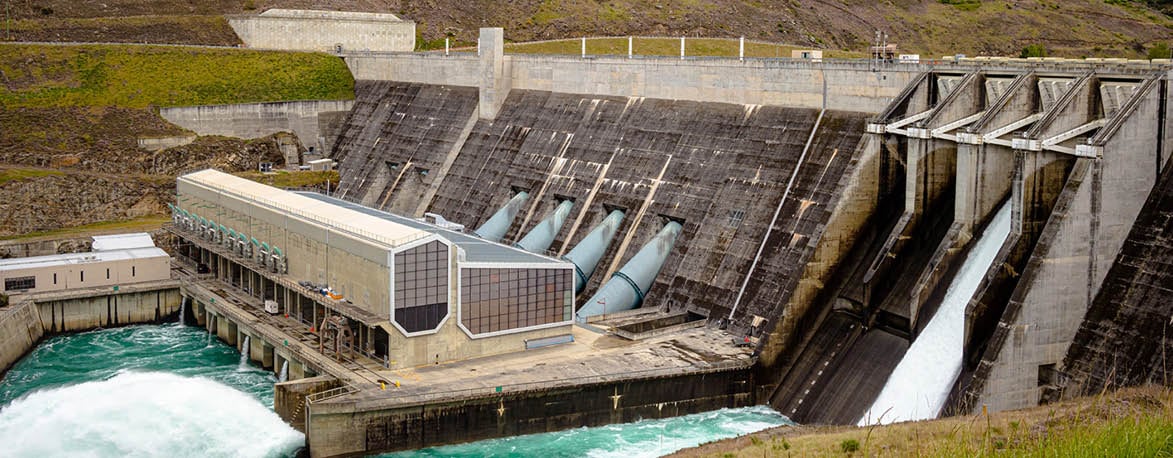
It is important to note that the flood damage wasn’t nearly as severe as it may have been thanks to some of the infrastructure that was already in place and the additional protection provided by the temporary barriers that were quickly set up. Proactive operation of the The Glenmore Dam helped reduce the impact of flooding along the Elbow River from a 1-in-200-year to an approximate 1-in-100-year level downstream of the dam. Within the Bow River catchment upstream of Calgary, several dams also helped to attenuate (hold back) flood waters. Without this infrastructure already being in place, the devastation would have been far greater than the widespread damage that occurred.

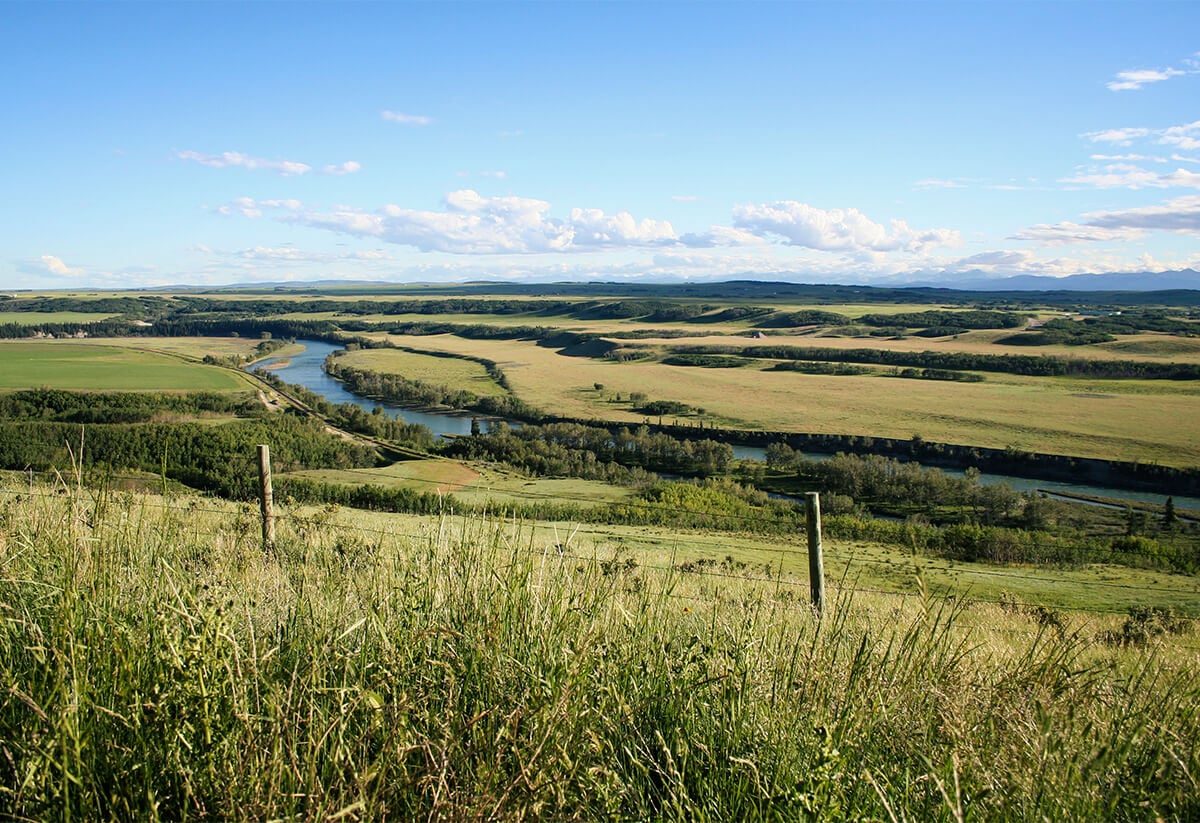
Severe flooding also occurred along several other rivers that originate in the eastern Rocky Mountains slopes such as the Highwood River, Sheep River and the Red Deer River.

img-Bow-ing to Resilience


Delivering solutions

As the region cleaned up the mess left behind by the widespread flooding, government action followed closely behind. Within a few months, the provincial government offered to purchase some properties at assessment value, most impacted by the floods. This allowed homeowners in the most vulnerable area to re-locate if they desired to, rather than work to rebuild their properties and improve their resilience.

The city and province then joined forces to do a cost-benefit analysis of the flood resilience measures that could be implemented relatively quickly. We worked with another consultant to provide a comprehensive list of the projects that could be undertaken (groundwater pumps, berms, floodwalls etc.) to then determine what would present the best overall value. From there, the governments were able to work together to determine the investment needed to address projects from the list on an annual basis.

Then there was the large-scale work that was needed. It was recognized that additional storage capacity was needed upstream of the City, and not enough could be added to the existing infrastructure. The proposal was brought forward for the Springbank Off-stream Reservoir, which would provide protection along the Elbow River. The 3,700-acre dry reservoir, located approximately 15 km west of Calgary, would help divert millions of litres of water during a flood event which could then be slowly released back into the watershed when the system could bear it. Completed in the first half of 2025, the 29-metre tall, 3.8 km long storage dam and reservoir will now protect residents along the Elbow River.

An upgrade was also recommended, and completed, for the existing Glenmore Dam within the City on the Elbow River. The installation of a series of new 2.5-metre-high steel gates has added significant additional capacity, estimated at upwards of 10 billion litres. The new Springbank Reservoir and the upgraded Glenmore Dam will be operated in tandem to achieve optimal reduction of flood flows.

The province also led an extensive program for many municipalities to develop flood mapping for their community, maps that would allow them to understand vulnerabilities and act on them. Our team has been fortunate to develop numerous of these maps throughout the province, which has led to new investments in flood resilience and better flood awareness.

Lastly, the province will move forward with the next phase of designing a new dam on the Bow River upstream of Calgary to provide additional flood and drought resilience.

The work done to date, especially on the Elbow River and within the City of Calgary, has created significant improvements to the community’s overall flood resilience. From significant vulnerabilities at the 25-to-50-year flood event level in 2012, the City is now in a place where notable widespread flooding is not likely to occur for floods smaller than a 200-year event. That level of improvement has and will continue to create infrastructure and property damage savings in the billions of dollars. And work to further improve this is still ongoing.

Thanks to the ongoing government commitments to improving resilience in the Calgary region and beyond, Alberta residents and property owners are now far less exposed to the potential impacts of a substantial flooding event.
Share this page

  • Share on Facebook - Warning, this link will open a new tab.
  • Share on Linkedin - Warning, this link will open a new tab.
  • Share on Twitter - Warning, this link will open a new tab.
  • Share on Skype - Warning, this link will open your Skype application.

Related themes and tags

  • Climate (198)

  • Society (193)

  • Resilience (248)


  • Advisory (136)
  • Climate (171)
  • Future Ready (204)
  • Infrastructure (234)
  • Planning (113)
  • Water (127)

More on this subject

thn-kim-ferguson-Environment-Analyst

October 2026 | 5 minutes

WSP on contaminated land and managing the aftermath of mining

svg-icon Feature
Resilience , Resources
thn-web-hero-EA-permitting

September 2026

Environment Analyst’s Responsible Mining Guide: Faster permitting starts earlier

svg-icon Feature
Biodiversity , Resources , Society
THB - climate resilience

September 2026

What climate resilience means in practice

New Zealand
svg-icon Helen Clark Foundation
Climate , Resilience , Society , Technology
thn_harnessing_matauranga_maori_insights

September 2026

What iwi knowledge can teach us about regional connectivity

New Zealand
svg-icon Helen Clark Foundation
Places , Resilience , Society , Climate
thn_infrastructure and social cohesion

September 2026 | 5 minutes

The inextricable link between infrastructure and social cohesion

New Zealand
svg-icon Feature
Places , Society
thn-Big-Picture-2026

August 2026

What will shape Australia’s infrastructure landscape in 2026? WSP’s experts weigh in

Australia
svg-icon Feature
Data Centres , Resources , Society
Thn-Web-Article-VV-Kat-v2

July 2026

The anatomy of a powerful vision

svg-icon Feature
Resilience , Technology
thn-green-buildings

July 2026 | 5 minutes

Bringing central business districts back to life

svg-icon Feature
Decarbonization , Places , Resilience
thn-fifa-world-cup

June 2026 | 4:55 minutes

Before the Opening Match: The Decisions that Shape Major Event Success

United States
svg-icon Feature
Mobility , Places , Society
Thn-Web-VV-Matt

June 2026

Nature Paves the Way: Can Pine Trees Shape the Future of Sustainable Road Infrastructure?

New Zealand
svg-icon Feature
Resilience , Resources , Mobility , Decarbonization
CS2026_4218_Energy Image_Thumbnail

May 2026

Aotearoa New Zealand’s energy turning point

New Zealand
svg-icon Feature
Climate , Energy Transition , Technology
THB - Te Ao Maori

April 2026

Rethinking cost-benefit through a Te Ao Māori lens

New Zealand
svg-icon Helen Clark Foundation
Society
  •   Page will open in a new tab
  •   Page will open in a new tab
  •   Page will open in a new tab
  •   Page will open in a new tab
  •   Page will open in a new tab
  • Who We Are
  • Our history
  • Future Ready
  • New Zealand Leadership
  • Global Leadership
  • Our offices
  • What We Do
  • Sectors
  • Services
  • Projects
  • Insights
  • Climate
  • Mobility
  • Places
  • Society
  • Resilience
  • Technology
  • Careers
  • Join Our Team
  • Holiday Act Remediation for Former Employee
  • Early career
  • Experienced professionals
  • Why join us?
  • Corporate
  • Sustainability
  • Health and Safety
  • Investors
  • Business Conduct Hotline
  • News
  • Ethics and Integrity
  • Engineer in Safety
    ©2026 WSP
    • The WSP Logo
    • Privacy Policy
    • Anti-Spam Commitment
    • Cookie Notice
    • Terms of Use
    • AI statement
    ©2026 WSP
    Exiting our Website

    You are about to leave WSP.com and are being redirected to a job opportunity at Louis Berger, which has been recently acquired by WSP in the US.