PROJECT DESCRIPTION
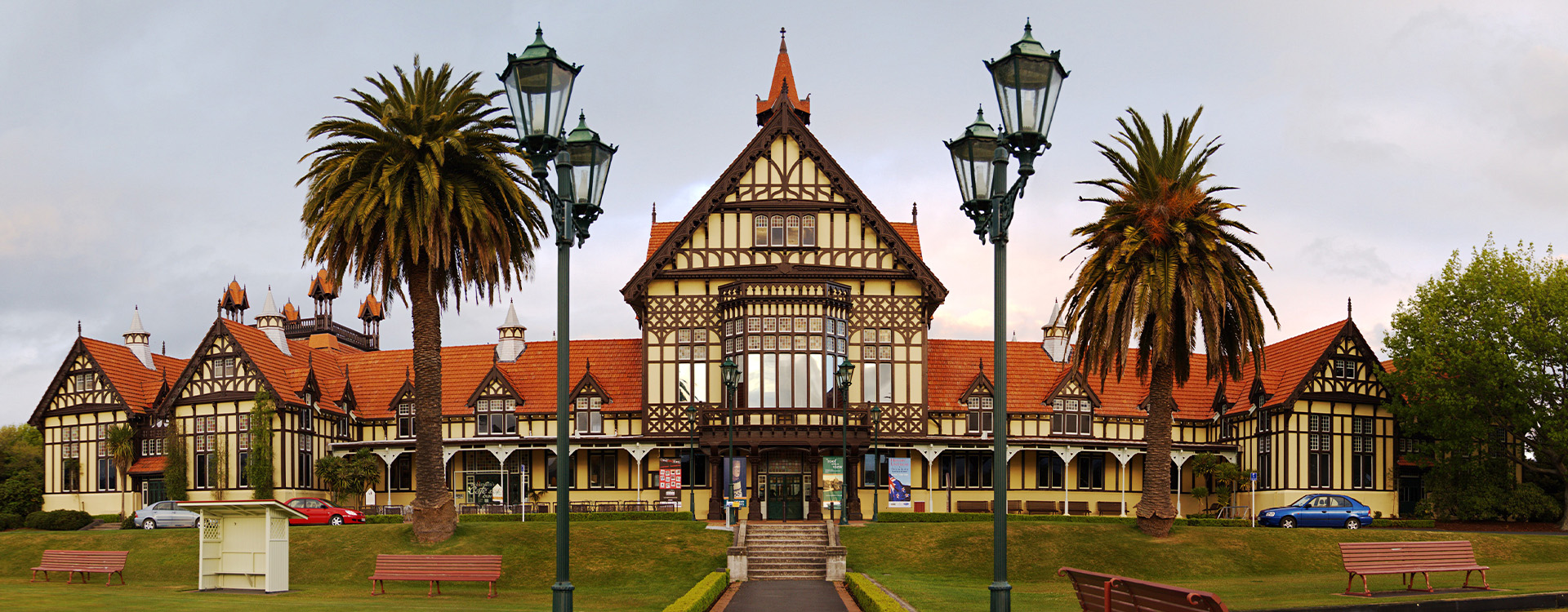
Te Whare Taonga o Te Arawa - the Rotorua Museum (formerly the Government Bath House), was closed due to damage from the 7.8 magnitude Kaikoura earthquake event in 2016. The project scope that has evolved out of this event includes: seismic strengthening, heritage conservation, spatial amenity and way-finding improvements, modernisation of building service infrastructure, and roof and cladding remediation.
CLIENT BRIEF/PROJECT CHALLENGES
Te Whare Taonga o Te Arawa is a category 1 heritage building for which Rotorua Lakes District Council (RLC) acts as kaitiaki (guardian). It is located in a geothermally active, Iwi owned, registered wāhi tapu (sacred) site. The building acts as a modern museum with high exhibition/artefact lender thresholds for indoor air quality control.
The building itself carries local, national and international significance. It was constructed in an Elizabethan Revival style, using a variety of materials and methods, including 500mm thick and up to 11m high unreinforced masonry sections. It was constructed over a 103-year period, starting with the original central hall, southern and northern galleries and north wing (from 1906 to 1908), north extension (2008) and south wing and south extension (2011).
WSP worked with a number of stakeholder groups, each with their own systems, processes, accountability requirements, expectations and motivating drivers.
OUR SOLUTION
WSP were appointed as Project Managers in November 2018 and are continuing to guide RLC’s Project Steering Group through critical decision-making points, whilst navigating the Design Team through the necessary design process, resource and building consents and heritage approvals.
To ensure the best value is delivered, the project recently concluded geotechnical and structural peer reviews. This has informed a Rotorua Lakes Council decision to replace the incumbent Structural engineers team.
WSP has also undertaken a Rapid Assessment post January 2021 Rotorua earthquake event, as well as support with ongoing short-term repairs and maintenance on essential infrastructure.
OUTCOME/CLIENT BENEFITS
The Business Case for the building sets out anticipated social, direct and indirect fiscal benefits. These inform the overall goal that Rotorua Lakes Council have a fit–for–purpose building which aims to:
- Provides a safe venue for visitors and Council employees;
- Preserve and made accessible Aotearoa New Zealand’s heritage;
- Tell the stories of Rotorua and its people, and is relevant to the community;
- Optimise the use of public assets.
A number of KPIs have been established for each target, which inform the Rotorua Museum Development (RMD) Project’s objectives.
RMD illustrates the capacity of WSP to manage complex heritage projects and to work with stakeholders throughout this technically demanding project. Meeting our project objectives, influences the successful attainment of the client’s benefits for the overall project.