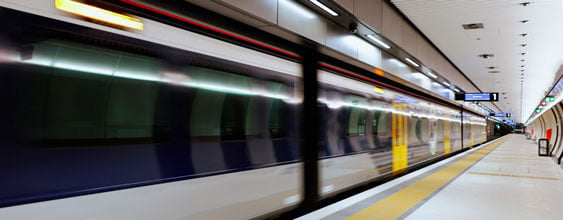
Let’s Get Wellington Moving (LGWM) is a joint initiative between Wellington City Council, Greater Wellington Regional Council, and Waka Kotahi NZ Transport Agency. The initiative includes all the ways people get to and around the city, and how the city develops alongside its transport system. It comprises a number of projects, including the creation of a new mass transit system to connect the railway station with the Hospital, Newtown, Miramar and the Airport. The Wellington Public Transport Spine Study (PTSS), completed in 2013, investigated the feasibility of different routes and modes for creating a high-quality ‘Public Transport spine’ between the Railway Station and Newtown/Kilbirnie.
LGWM needed to assess whether the PTSS was still viable and engaged WSP to test the current assumptions for the mass transit route through the central city and determine the steps that would be needed to futureproof a route for a possible upgrade to light rail transit (LRT).
OUR APPROACH
The WSP team created a collaborative environment with client involvement based on good transportation principles, and in accordance with NZ Transport Agency standards. They challenged and tested each of the key assumptions about the project in a constructive manner. This included reassessing the preferred MRT corridor and creating other corridor options for the purpose of the assessment. LRT and BRT systems were also compared in this work. The team mobilised international experts at very short notice to be involved in risk and governance group workshops to ensure issues relating to Light Rail, Resilience and Travel Demand Management were understood and articulated. WSP also shared insights from projects such as the WICB and the Basin Reserve Projects to assist the LGWM teams. WSP also provided technical advice to input to the LGWM scenario testing, to assist in calculating the future demand for mass transit along the preferred route(s) and considering this against the capacity of the proposed bus system.
OUR SOLUTION
Our assessment found that the route recommended in the PTSS Study for the MTC is still the best performing overall, even with the updated assessment criteria used in the review. We identified concerns over the absolute numbers of rail station transfers forecast by the PTSS modelling. As such, our recommendation for the development of the Wellington Passenger Transport System is that it should be based on an agreed pathway for improvements, with decision trigger points that, when satisfied, would indicate the need for the next stage of development. Pathways need to be flexible to allow for changing circumstances, such as increased travel demands, land use development or wider regional economic performance factors.
OUTCOME/CLIENT BENEFITS
WSP developed a staged pathway with intermediate improvements to services and infrastructure for the next business case phase.