Australia’s transition to a cleaner energy future is already well underway. With the global push towards Net Zero, and the planned imminent retirement of Australia’s coal power fleet, renewables such as wind and solar will dominate our future energy landscape, helping to achieve State and national renewable energy targets. It makes sense: Australia is a sunny, windswept land, and solar PV and wind are among the lowest-cost forms of generation to build.
But the ‘energy trilemma’ has three elements: Australia’s future energy system will need to be sustainable and affordable but also, crucially, reliable. This has been a question for solar PV and wind power – as baseload thermal generation exits the market, what will happen on still nights when wind and solar output are low? What will happen when demand patterns don’t align with supply patterns (which tend to be highest around the middle of the day)? This is where energy storage solutions come into play.
Currently, there are two main options for the energy storage necessary to support the intermittency of variable weather-dependent renewables: pumped hydro and batteries. They both have a role to play – but even the largest utility-scale battery installations, cannot yet provide the deep or long-duration storage for many hours, or even multiple days that the grid of the future will need as renewables increasingly lead the generation mix. This unique quality of pumped hydro is driving the current resurgence of this long-established technology.
Another major driver of pumped hydro resurgence is supportive government policy. For example, the NSW government has a pumped hydro strategy as part of its NSW Electricity Framework, and a grants program to help projects get off the ground.
With these drivers of supportive policy and market needs, Australia’s three existing operational pumped hydro schemes will soon be joined by more. Numerous potential projects have been identified in recent years and some are already breaking ground on construction..
Pumped hydro – a giant water battery to stabilise the grid
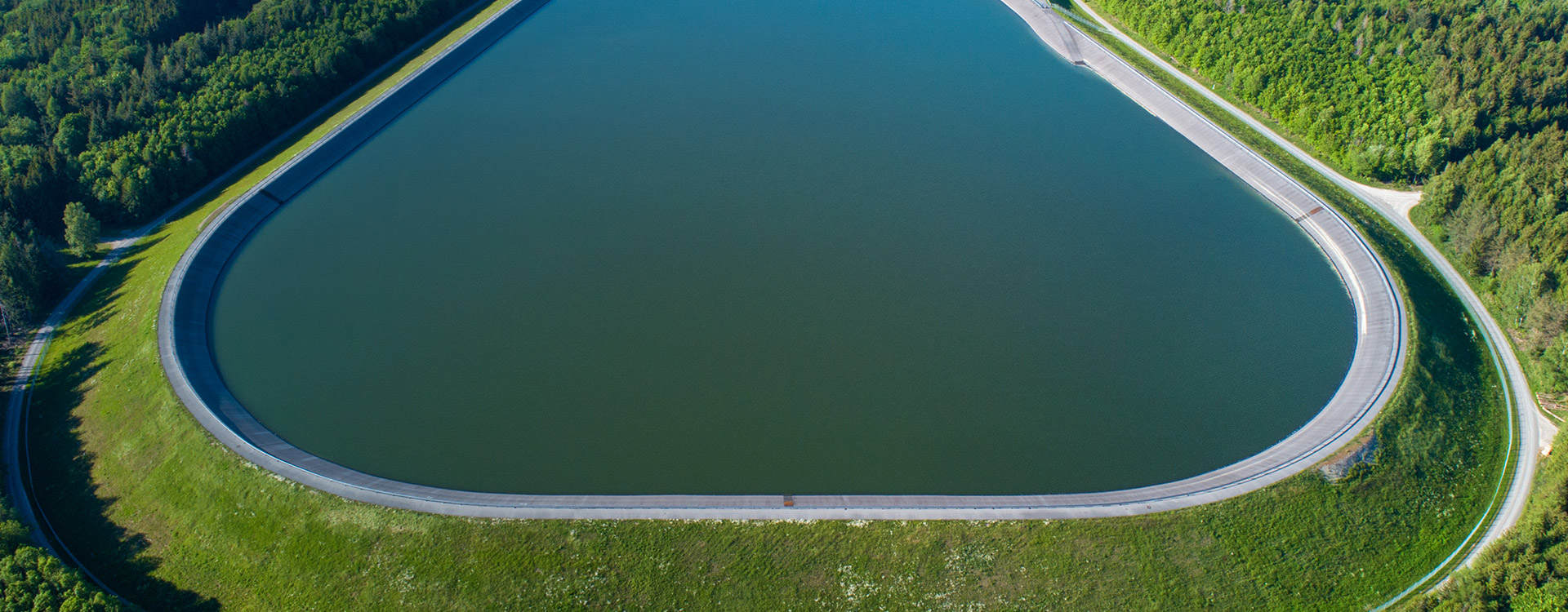
Pumped hydro is an elegantly simple concept – a form of water storage battery that charges and discharges in cycles as needed. Water is stored in a lower reservoir which could be an existing lake or dam, a mine pit, or a purpose-built new water storage. When there’s plenty of generation capacity on the grid but electricity demand is low, the water is pumped uphill into an upper reservoir (known as the upper storage). When electricity demand is high, the water is allowed to flow downhill, passing through a turbine to generate hydroelectricity as it returns to the lower storage reservoir, to later be recycled during the next pumping mode cycle. All that’s required are two storages/reservoirs at different elevations connected by a conveyance and a pumping/generating unit. Configurations vary, but these are the common elements.
A pumped hydro scheme can take a ‘closed loop’ form, where the whole operation sits outside of a river system and the water is essentially ‘recycled’ between the two storages and periodically topped up to compensate for evaporation-related water losses. It can also take an ‘open loop’ form, where the pumped hydro operates as part of an existing hydropower scheme on a river system, with the reservoirs being replenished through the usual hydropower operation and flow regime.
The pumped hydro scheme is operated as an electricity generator only when it’s needed – in other words, it doesn’t replace baseload generation. It is a storage technology, ready to provide stability or fill in peaks when required by the market to smooth the peaks and troughs of supply and demand by ‘soaking up’ excess wind and solar energy in the pumping cycle, and filling the gaps in wind and solar generation in the generating cycle. Other increasingly valuable contributions of pumped hydro in a changing grid are the critical ancillary services needed to stabilise the network, such as voltage support and regulation, frequency response, spinning reserve, active and reactive power, emergency start-ups, quick and black-starts, and back-up reserves.
Despite being able to provide these valuable grid services, not all pumped hydro schemes are connected to the grid. In remote areas, pumped hydro can combine with local solar or wind power to form an effective stand-alone hybrid off-grid system able to power a self-sufficient industry, such as on mining sites.
A fundamental difference between a pumped hydro scheme and a traditional hydropower operation is that pumped hydro is not a net generator of electricity. It is both a load and a generator, at different times, as needed. It best serves as a grid stabiliser, with perhaps its main advantage being its state of readiness to provide valuable fast start-up of electricity generation in times of peak demand.As well as differing from batteries in terms of the far longer duration of storage, pumped hydro projects use very well-known and tested technologies and infrastructure that can last 50 to 100 years or even longer, compared to the short lifespan of batteries. At end of life, the sites can be reused for new purposes, such as lakes for recreation or for biodiversity.
Pumped hydro progress in Australia
There is no shortage of potential sites for pumped hydro across Australia. With support from the Australian Renewable Energy Agency (ARENA), the Australian National University published a pumped storage ‘atlas’ identifying hundreds of potential pumped storage development sites across Australia. Yet, there are still only three pumped hydro schemes currently operating in Australia: Wivenhoe Dam, Tumut 3 and Shoalhaven power stations, together amounting to 1.6 GW.
The task ahead is huge. The Australian Energy Market Operator’s 2022 Integrated System Plan projects a need for more than 40 GW of storage solutions by 2040, and that at least 10 GW of this will need to be medium (4 to 12 hours duration) and deep storage (12 hours or more duration).
In NSW, construction of Snowy 2.0 is underway and is expected to be complete in 2026. The scheme will link two existing dams in the Snowy hydropower scheme to provide an additional 2,000 MW of on-demand generation to the National Electricity Market (NEM) and provide about 175 hours of storage, enough to power 3 million homes for a week.
In Tasmania, the Battery of the Nation initiative, which aims to capitalise on Tasmania’s existing hydropower infrastructure to provide more dispatchable power to the NEM via undersea interconnection, has progressed to the identification of a preferred site and layout for a pumped hydro scheme at Lake Cethana, expected to be able to provide 750 MW and up to 20 hours storage.
While another 15 to 20 pumped hydro projects have been proposed around Australia and are in various stages of preliminary investigations, only one other has progressed to construction stage. This is the innovative Kidston Pumped Storage Project in far north Queensland – the flagship project of the Kidston Clean Energy Hub. Kidston is a first of a kind – the first pumped hydro project in Australia to use abandoned gold mining surface pits in the reservoir configuration, and the first to support the integration of solar and wind with pumped hydro into a renewable hub. The Kidston project will provide 250 MW of generation, over 8 hours storage, with a ramp-up time of less than 30 seconds. Construction is expected to be completed in 2024.
WSP was proud to support the Kidston project by performing the technical due diligence to identify the key issues and risks associated with the project during its development and operational phases. Since 2021 we have been active in the project as Independent Certifier and continue to support the project in this role.
We have also supported a number of other proposed Australian projects, including Snowy 2.0 (tender stage designs of cavern complex and tunnels for a bidding consortium, as well as Geotechnical Baseline Report (GBR) reviews and advice for Snowy Hydro), Goat Hill Pumped Hydro Project for Altura in South Australia (geotechnical studies and development application), Burrawang to Avon Tunnel Pumped Hydro Project for WaterNSW (options selection and concept design), Big T Pumped Hydro for BE Power in Queensland (geotechnical investigations to support a bankable feasibility study) and Kanmantoo Pumped Hydro Project for AGL Energy in South Australia (technical due diligence).
WSP is currently supporting ATCO Australia with the 325MW Central West Pumped Hydro Project near Yetholme in Central West NSW, set to begin construction in 2023, providing eight hours energy storage. For this project we delivered the reference design to define the major project elements and help refine the project scope, schedule and budget. We also conducted the geotechnical site investigations and reporting to understand the existing ground conditions and how they may influence the construction of the project. Our team prepared the full Environmental Impact Statement, and the associated planning and approvals requirements including ecological and hydrological impact assessments. Having recently been awarded the role of Owner’s Engineer, we’ll be continuing on this project for many years.
In the next article of the series ‘Getting pumped hydro moving - the pathway to financial close’, Andy Noble draws on his extensive experience and shares his insights around the growing demand for pumped hydropower projects and the considerations and strategies to achieve financial close.
If you have any questions, or would like to find out more, please contact us.
To stay ahead of our latest information, publications, videos and posts, please subscribe to our news, follow us on LinkedIn or visit wsp.com/au