Across Australia, a record-breaking amount of money is being invested in infrastructure however, this does not mean these mega projects are without challenges. A 2019 research paper from Infrastructure Australia revealed that over the last decade, $20 billion dollars worth of infrastructure projects have been delayed or cancelled due to poor community engagement. Along with common risks such as supply chain issues and labour shortages, community opposition is increasingly a key project risk that needs to be managed.
Contract requirements around when and how to engage with the community are not uncommon in large construction projects.
And while there is no doubt that these are useful and valuable tools to ensure the community has information at hand, good community engagement- the type that manages project risk- is much more than this. It means a community is listened to, treated with respect and empowered with information.
“There are countless examples of individuals or community groups that have delayed, changed and stopped a project, not necessarily because they are opposed to the project, but because they don’t feel like they are being treated with respect,” Holly Love, Technical Executive - Communications & Engagement explains.
“To combat this, you want to build deep relationships very early in the project. Research has shown by listening, engaging and consulting with people at the beginning, we can bring projects to life in shorter timeframes.”
 Planning and discovering
“A project’s planning phase should contain a significant investment in community engagement and involve the project’s senior leadership. This not only creates an opportunity for the community to understand the project and it’s potential impacts and benefits, it also humanises the companies involved,” Holly says
“What engagement channels you use to do this should be tailored to your specific community, but include multiple platforms to ensure everyone can interact and have their say in the way that best suits them.”
Multiple platforms allow a larger subset of the community to be involved and increasingly requires a digital solution.
Damien Cutcliffe, WSP’s Director of Digital Services, says a discovery phase for the solution where the who, what and why will be answered is part of building a digital solution that aligns with the projects vision.
“Everything we build must be customer-centric, there is no point building an amazing back end system if the user interface is hard or difficult to navigate,” he says.
“We use prework, user identification, formal discovery, validation and issue to allow us to develop the best solutions for customer engagement.”
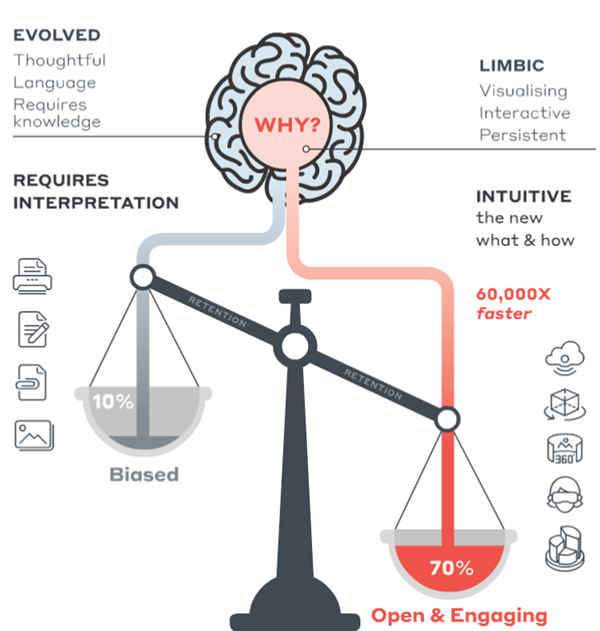
Digital can also help with good communication by utilising the power of visualisation.
“We’re hardwired to more rapidly engage with the visual and it can make the complex, simple.” Damien says.
Engagement during delivery
Melbourne’s Metro Tunnel project will create a new rail line from Sunbury to Cranbourne / Pakenham, with five new underground stations at Arden, Parkville, State Library (CBD North), Town Hall (CBD South) and Anzac (Domain).
On this project we developed the Melbourne Metro Tunnel Environmental Monitor which are an interlinked series of sensors to capture noise, air quality and vibration.
“We started with the environmental management framework and the environmental performance requirements and built a solution from there. It allowed for transparency and accountability in construction delivery,” Damien says.
“We then took all the different sensor data and transferred them to one platform to provide a robust system of monitoring, inspecting and auditing environmental performance and reporting. It improved construction management by using real time feedback and improved relationships with stakeholders as they knew they could access everything in real time.”
Measuring success
Infrastructure isn’t just a project, it’s a social outcome for the benefit of the community.
Lucy Burgmann, WSP’s National Executive- Social Strategy and Outcomes says “our social outcomes framework is key to how we assist clients to deliver legacy, and it starts with a vision. What do you want this project to achieve? How do you want to the people who use it or live around it to describe it?”
“We often think about project impacts as negative things such as noise or closures but starting with a social outcomes approach means we can say positively ‘what are the impacts the community wants from this project?” Lucy explains.
“Social impact goes by many names – social license to operate, ESG (environmental, social, governance), community benefit sharing, legacy and sustainability but it all essentially means considering the longer-term impacts beyond the construction of a project.”
“You cannot pin social outcomes at the end, it needs to be part of the original vision. Social outcomes and community engagement are strongly linked,” says Lucy.
Often projects will use formal reporting to show social outcomes as well as informal communications across different platforms.
“There is no cookie cutter approach, it will vary from project to project, from community to community,” says Lucy. “But you want measurements in place to make sure your investment has the desired effect on the community. “We can track this using data, case studies and updatable dashboards. It’s about being publicly accountable.”
Curious about engagement and digital solutions? Contact us.


