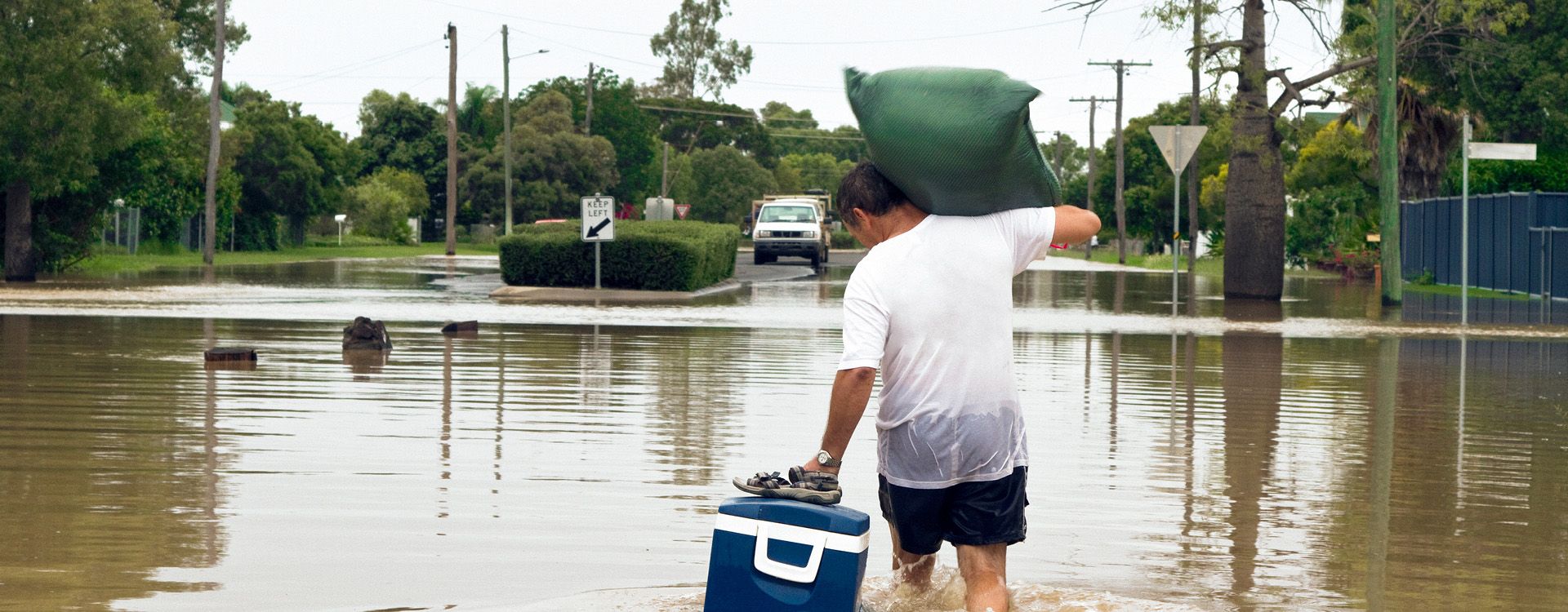
Extreme weather inevitably comes with serious and damaging outcomes. Events such as these are always devasting to communities throughout Australia from remote regions to our urban centres. However, the communication used to describe these occurrences portrays them as something that is not the norm and different to our regular weather patterns. Media headlines from the March 2021 floods in New South Wales include:
WSP Principal Water Resource Engineer Karen Brakell and Senior Sustainability Consultant Georgia Harmey discuss how we can use these extreme weather events as an opportunity to rapidly advance Future Ready planning.
“Despite the headlines in the media, and perhaps because of these, it is important to clear up the misinterpretations of hydrology terminology,” says Karen. “In particular when we are talking about the assessment of risk and likelihood of occurrence.
“A 1-in-100-year flood event doesn’t actually mean that a flood of that magnitude is likely to occur once in a century. Technically, the event has a 1-in-100 chance of occurring in any one year – also known as a one per cent Annual Exceedance Probability (AEP).
“What it actually means is that an event of this size could occur multiple or zero times in any given year. The frequency of the event, however, is typically driven by the various weather patterns.
“To assist with removing this misinterpretation, it would be better described in terms of the AEP.”
The impact of Climate Change
The major driver of interannual climate variability in Australia, particularly eastern Australia, is the El Niño–Southern Oscillation phenomenon. El Niño is an anomalous large warming of the central and eastern tropical Pacific Ocean, while La Niña, the reverse phase of the system, is an anomalous cooling. The Southern Oscillation refers to a see-sawing of atmospheric pressure between the northern Australian–Indonesian region and the central Pacific Ocean. El Niño events are strongly associated with abnormally high pressures in the northern Australian–Indonesian region and abnormally low pressures over the central Pacific, while the reverse is true during La Niña events. (source: Australian Bureau of Statistics)
“Our climate is highly variable,” says Georgia. “The east coast of Australia is significantly influenced by weather patterns. It is likely to see periods of heavy rainfall during the La Niña phases and more bushfires during positive phases of the Indian Ocean Dipole and negative phases of the Southern Annular Mode. Without considering the different weather patterns at play, putting a string of successive heavy rainfall events purely down to climate change may be too simplistic.
“CSIRO projections for the East Coast Cluster state that natural variability will likely remain the main driver of rainfall patterns over the next few decades. However, with more uncertainty of the key drivers in the future there is consensus that less rainfall will likely occur in the winter months and more in the summer months. This will result in a reduction of total annual rainfall. However, rising atmospheric temperatures will lead to an increase in the intensity of heavy rainfall events as the atmosphere will hold larger amounts of moisture.
“Climate scientists are less confident about the exact magnitude of change, which makes it extremely difficult to accurately predict the frequency and intensity of events we’re likely to see in the future. This in turn affects the incorporation of projections into the flood models we use to inform development decisions. It is therefore imperative to undertake sensitivity testing on a range of scenarios to assess the breadth of impacts that could occur in the future. Thereby taking a risk-based approach to implement appropriate mitigation measures.”
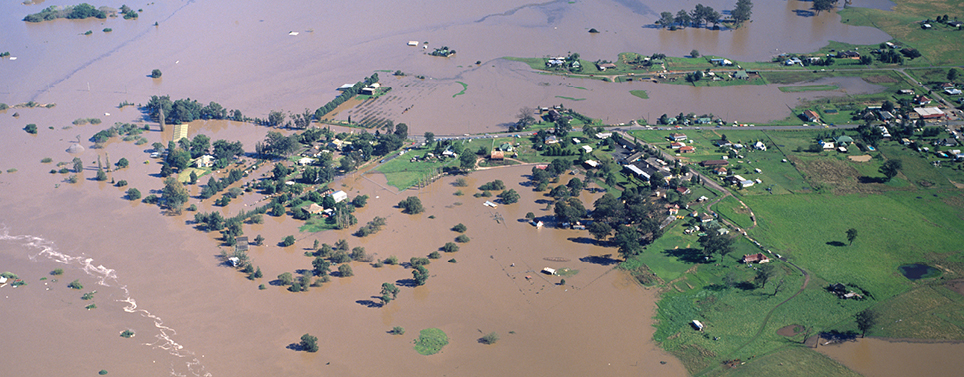
A main point of difference regarding the March 2021 flood event was its duration and spatial extent where the majority of the NSW east coast and also southern Queensland was impacted. Experts say what makes this flood event a stand-out is the vast area affected.
Karen says, “This is why the event is considered to be ‘unprecedented’. This observation, coincidence or not, parallels with the spatial unprecedented extent of the 2019/2020 summer bushfires which ravaged a significant portion of NSW. Whether climate change is the main driver for this is likely to only be confirmed in the future when longer term data collection has occurred.”
“Rainfall intensity, duration and spatial distribution are key drivers of the severity of flooding events and should therefore be the focus points when we look to design for the future,” says WSP’s National Lead for Climate Adaptation and Resilience and Future Ready Co-lead, Kieran Power.
“Sea level rise also requires thoughtful consideration. If a high astronomical tide occurs at the same time as an extreme rainfall event, storm surges will cause significantly more damage to coastal regions.”
Floods are a particularly costly natural disaster for insurers. AUD1 billion was paid out during the February 2020 east coast storms and flooding event, and the Insurance Council of Australia declared a catastrophe for large parts of New South Wales struck by devastating floods in March this year. The Australian Prudential Regulatory Authority warned that as the risk of extreme events is priced into insurance premiums, the cost of insurance may threaten the long-term stability of the financial system. (source: The Guardian 23 March 2021)
Understanding floods in real time
The growing availability and affordability of real time data capture is also driving a better understanding of major flood events.
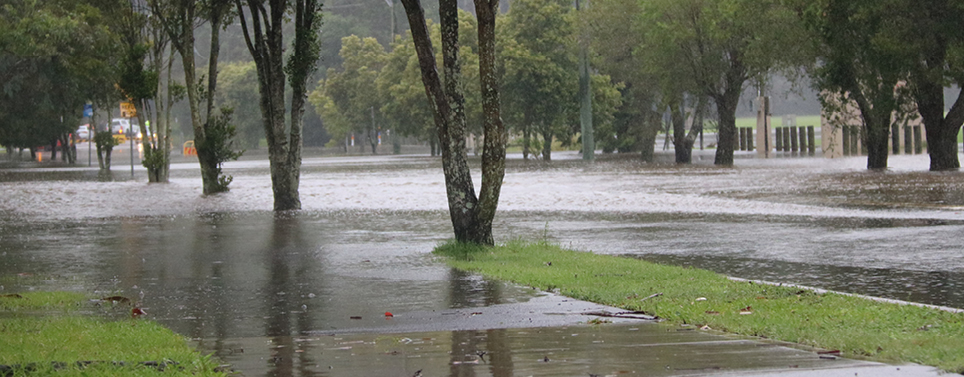
Karen says, “Satellite imagery is being captured and shared by a range of organisations such as the European Union Earth Observation Programme's Sentinel-1 satellite and NASA Earth Observatory. Data and visual imagery are invaluable as it allows hydrologists to immediately assess impacts on the performance of our clients’ assets and compare actual data to model predictions which can be used to better inform decision making around current and future developments.
“Our team of hydrologists used photos, videos and aerial imagery from the recent March 2021 floods to compare the Inland Rail Network against their models of flood depths on the project construction where WSP has been working with ARTC to expand this critical piece of nationally significant infrastructure. Noting that no two floods are alike, having access to real time data and future climate projections will only better equip us to help our clients build resilience to future natural hazards.”
Opportunity in adversity
During the height of the floods Kieran was busy checking in with clients to gather as much information as possible about the impact, “With flooding expected to become more frequent and severe due to climate change, these events provide a window into the future.
“While we understand that it was a sensitive time, several of our clients who own large property portfolios in NSW appreciated being contacted, asking for advice on what type of real-time data should they be gathering. By taking plenty of photographic evidence, carefully observing how flood waters interact with assets, and documenting the physical and financial impacts, we can more accurately estimate how these types of event will impact clients into the future and inform better decision-making.”
“The recovery period is also a key time to gather information,” adds Karen. “After an event like March 2021 and also the bushfires of the summer of 2019/20, data gathering can inform the plan of recovery as it helps identify which assets are most vulnerable and which ones are vital to operations.
“There is an increasing expectation from communities for visibility of data which leads to consistent engagement with government on infrastructure decisions being made.
“For organisations who maintain a large number of assets, it is vital to have systems in place that support, maintain and deliver reliable, consistent data. By improving our collective approach for managing asset data, we can draw new insights to inform and enable leaders to make key infrastructure investments with confidence.”
To build back better, it is important for organisations to have a good handle on their approach to asset management. Identifying the value from their assets and services, and striking the appropriate balance between cost, risk and performance will shift them towards achieving more balanced economic, environmental and social outcomes.
By understanding the trends through our Future Ready innovation platform and engaging with our people and clients, we continue to provide guidance for organisations and governments helping communities recover, ensuring the decision-making process for building back better leads to resilient outcomes.
For more information, contact us.
To stay up to date with our latest news, publications, videos and posts, please follow us on LinkedIn.