Working on the Australian Research Council (ARC)-funded ‘Spatial planning for urban biodiversity conservation: implementing Biodiversity Sensitive Urban Design (BSUD) across scales and contexts’ project, we will help develop an open access online tool. This tool will prioritise places for biodiversity action, and quantify the potential impact of different design and planning scenarios on urban nature.
Incorporating nature into city design offers numerous benefits. These include enhancing air quality, promoting biodiversity, supporting physical and mental health and wellbeing, and creating a more sustainable and resilient urban environment. However, there is a lack of evidence-based guidance on how to arrange projects that achieve landscape ecological connectivity goals.
As part of an ARC Industry Fellowship, Dr Holly Kirk, a Postdoctoral Researcher at RMIT University, and Dr Rodney van der Ree WSP’s National Technical Executive – Ecology, will work with other industry partners, including Lendlease and Knox City Council, to create a tool that will assist with designing landscapes that both protect important habitat, enhance biodiversity outcomes and create functionally connected ecosystems in urban areas.
“We have collaborated in the development of preliminary connectivity modelling that underpins the proposed research, so we can see the potential of both the proposed mapping tool and the applied research questions that will be answered during development,” Rodney says.
“Building on this base and delivering world-class scientifically robust research outcomes that we can apply practically and use in developing strategic advice and design solutions can improve ecological outcomes on a wide range of development projects. This will provide immense benefits to the developers, regulators and clients we work with.”
WSP is committed to building Future Ready™ communities that are better places to work, live, study and play.
Holly says that understanding how the restoration of habitat affects the distribution and connectivity of wildlife populations is central to urban planning, but currently few urban planning tools exist that can be used for this purpose.
“Many governments and developers are working to create urban areas that can benefit native species by planning for habitat restoration and protection. It’s exciting to see frameworks such as BSUD being used to improve outcomes for nature, but urban planners and designers need help to optimise implementation. The new project will address this by developing methods, guidelines, and a software tool enabling industry to use biodiversity modelling for the spatial assessment of BSUD.”
Find out more about how WSP is helping protect and restore our natural resources.

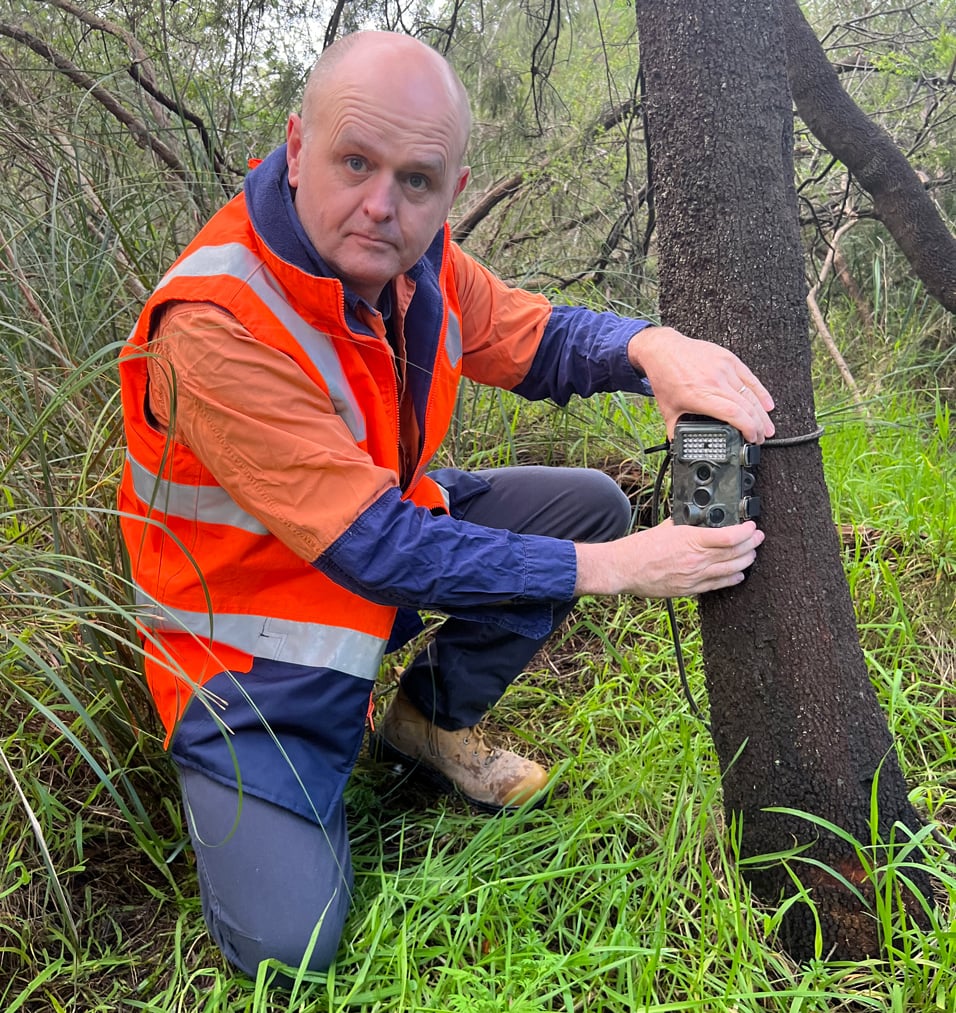
Holly Kirk, Postdoctoral Researcher at RMIT University and Dr Rodney van der Ree, WSP’s National Technical Executive – Ecology