At a glance:
- 50-kilometre pipeline network will support long-term water security and resilience for Kangaroo Island communities
- Network features advanced reverse osmosis technology to convert seawater into safe, clean drinking water
- Pipeline bushfire preparedness strengthened through the installation of 400+ fireplugs, providing instant access to water during emergencies.
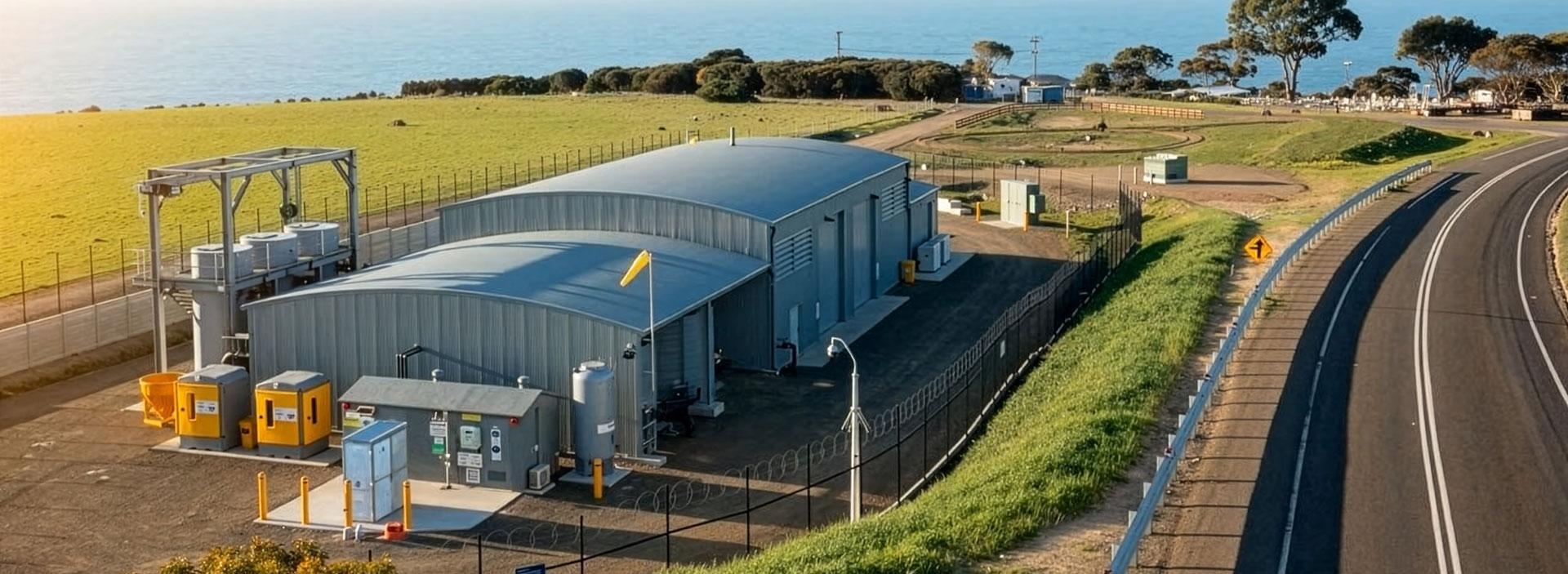
The construction of Kangaroo Island’s second desalination plant was a transformative infrastructure project designed to support long-term drinking water security for SA Water customers on the island, ensuring sustainable water security for residents, businesses and the local Country Fire Service (CFS).
Kangaroo Island, renowned for its pristine landscapes and unique biodiversity, has historically faced challenges relating to long-term drinking water security. Seasonal rainfall variability, coupled with devastating bushfires in 2019-20, highlighted the need for a climate-independent solution.
The primary objective of the new desalination plant was to provide a dependable source of potable water for 4 island communities who previously relied on rainwater tanks and trucked water, leaving them vulnerable during droughts and emergencies. By introducing a desalination facility to supply mains water to these communities, the project delivers resilience against climate variability and supports long-term economic growth.
Beyond meeting basic water needs, the plant plays a strategic role in enhancing bushfire preparedness. The installation of more than 400 fireplugs along the new pipeline network ensures the CFS has immediate access to water during critical events. This dual purpose, community supply and disaster resilience, positioned the project as a cornerstone of Kangaroo Island’s recovery and future development.
Innovative engineering delivers robust solutions
WSP was engaged by SA Water and John Holland Guidera O’Connor joint venture to deliver the preliminary and detailed design for Kangaroo Island’s new reverse osmosis desalination plant and its associated pipeline. We led concept development, engineering drawings, spatial alignment mapping, and comprehensive structural and mechanical design of key infrastructure, including buildings, pump chambers, and pipeline systems. Our technical advisory ensured robust solutions for both the plant and the extensive 50-kilometre pipeline network, supporting long-term water security and resilience for the island’s communities.
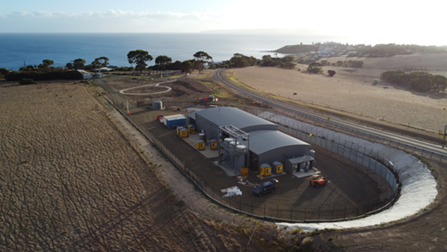
Engineering considerations were paramount throughout the design phase: detailed geotechnical investigations revealed highly variable coastal soils and zones of instability, requiring bespoke foundation solutions and carefully sequenced trenching to stabilise the pipeline route. Advanced hydraulic modelling was vital in optimising pressure performance along the 50‑kilometre pipeline corridor, managing dynamic coastal conditions and safeguarding sensitive marine ecosystems.
The desalination plant’s buildings and subterranean pump station were constructed to withstand harsh coastal conditions, guaranteeing operational reliability for decades to come. Marine works, including the installation of intake and outfall pipelines amongst the protected seagrass meadows, were among the most complex components, requiring temporary causeways and precision trenching for environmental protection.
The plant and pipeline became fully operational in late 2024. The project represents an investment of approximately $147.7 million by SA Water, reflecting its importance to regional water sustainability and resilience.