The tunnelling industry is generating more geotechnical data than ever before. The challenge is no longer collecting it, but using it effectively.
Despite decades of investigation, surveying, and monitoring, subsurface information remains fragmented, inconsistently structured, and often underutilised once a project is complete. As a result, the industry continues to re-discover ground conditions that have, in many cases, already been partially understood.
The future challenge for tunnelling is no longer collecting more data, but transforming fragmented geotechnical information into reliable, reusable subsurface intelligence. This means integrating geological, geotechnical and construction data into a continuously evolving knowledge base that supports engineering, risk and investment decisions throughout the infrastructure lifecycle. Such a shift reframes geotechnical information from a static project input into a dynamic, evolving knowledge system.
Without this shift, organisations risk repeating investigations, losing valuable knowledge between projects, increasing delivery uncertainty, and making decisions based on incomplete information.
Geotechnical data as a strategic asset
This transition requires a fundamental change in mindset.
Geotechnical information should no longer be viewed as a temporary deliverable tied to a single project lifecycle, especially where it is captured only as reports rather than as structured, reusable data.
It is a strategic infrastructure asset that grows in value when that underlying data is preserved, validated, and reused, including clear records of investigation locations and closure status.
Asset owners should treat the geological and geotechnical evidence base as a strategic input to investment, design, and risk decisions. Designers and constructors must integrate geological understanding, geotechnical risk management, digital delivery, and sustainability objectives, ensuring uncertainty is clearly communicated and managed. As underground space is a shared and constrained resource, long-term stewardship of geological and geotechnical knowledge is essential to support future development and protect existing infrastructure.
A critical weakness in current practice is data loss at project closeout.
Valuable borehole data, geological models, and construction observations are too often archived in inaccessible formats or lost entirely from future workflows.
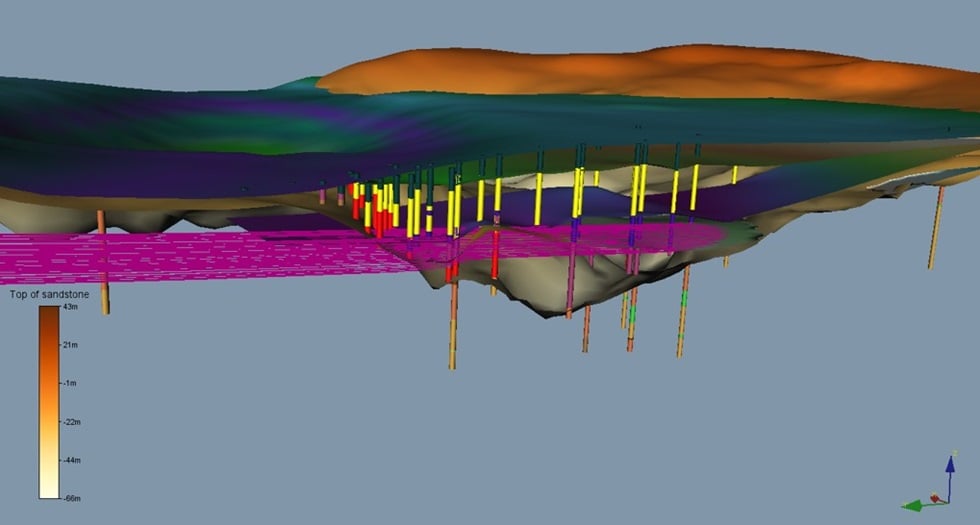
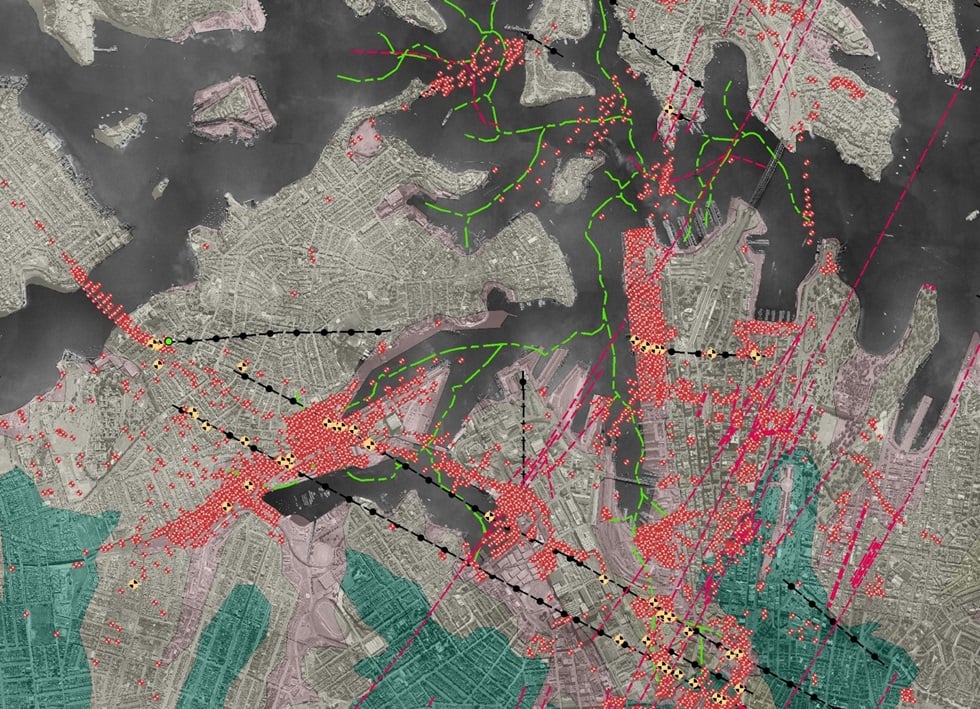
For example, major infrastructure corridors may generate hundreds of boreholes and associated investigations during planning and delivery. Yet much of that information can remain dispersed across project archives and consultant databases, making it difficult to reuse when future upgrades are planned.
Establishing centrally managed geotechnical databases, ideally under public stewardship, could help address this situation. It would enable the progressive development of regional subsurface knowledge, may help reduce duplication of investigation effort and support greater consistency in how ground conditions are understood and assessed.
From project silos to living subsurface systems
The industry is steadily moving toward whole-of-life subsurface intelligence, where data collected during investigation, design, construction, and operation is continuously retained, refined, and reused. In this model, geological understanding does not reset at each project boundary. Instead, it evolves as part of a living system of infrastructure intelligence.
This approach may support more structured approach to managing uncertainty. Ground conditions will never be fully predictable, but they may be more effectively characterised, bounded, and communicated. That shift may inform design, construction planning, and programme and cost assessment.
Potential benefits may extend beyond individual projects. A more integrated approach to subsurface knowledge may make existing information more accessible for investigation planning, risk assessment, forecasting and long-term infrastructure planning.
The value of accumulated knowledge is already visible in major infrastructure programmes.
On the Sydney Metro project, previously collected geological and geotechnical information was available to support corridor and alignment development before extensive new ground investigations were undertaken. While it did not remove uncertainty, it helped focus investigation effort on areas of greatest geotechnical risk.
Ultimately, the challenge is not technological. Many of the tools required to capture, store and analyse geotechnical data already exist. The greater challenge lies in establishing consistent standards, governance and long-term stewardship so that information remains reliable, interpretable and reusable over time.
Consistency begins with the fundamentals. Borehole records should include standardised information such as coordinates, elevation, drilling depth, completion status and associated reports. Without these basic data points, future users may struggle to understand what was collected, where it was collected, and whether it can be relied upon.
The role of digital tools and AI
Digital technologies and artificial intelligence are likely to play an increasing role in this evolution. They may be used to support interpretation and modelling, and may assist in prediction analysis. However, their effectiveness is fundamentally dependent on data quality, consistency, and transparency.
AI does not remove uncertainty in the ground—it reflects it. Without strong governance of data and clear understanding of model confidence, it risks amplifying poor-quality inputs rather than improving decisions. Engineering judgement therefore remains central.
Overcoming the barriers to subsurface intelligence
The future of tunnelling lies in moving from isolated data collection to integrated knowledge systems. Subsurface intelligence must become continuous, shared, and reusable, supporting not just individual projects, but entire infrastructure networks and urban systems.
Those who understand both the ground and the confidence in that understanding may be positioned to make informed decisions. And in tunnelling, better decisions are the difference between uncertainty managed and uncertainty realised.
Organisations that treat geotechnical data as a strategic asset may extend its usefulness beyond a single project, allowing subsurface knowledge to inform planning, design, construction, operation and renewal.
As geotechnical knowledge accumulates and is reused over time, it may become a significant lifecycle asset for an organisation.