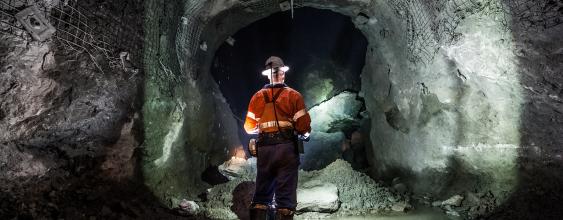
Mine operators across Australia are preparing for the transition from Workplace Exposure Standards to Workplace Exposure Limits, alongside changing requirements for work involving silica-containing materials.
Although these changes have developed over time, some of their practical implications may only become clear when the requirements are applied to specific tasks and operating conditions.
Those implications can extend beyond the limits themselves. Requirements vary between jurisdictions, and some exposure scenarios can be difficult to assess accurately through monitoring.
Meeting changing exposure requirements therefore takes more than monitoring against a new limit. Mine operators also need to understand how the requirements apply, build them into work planning and safety systems, and review whether those measures are working as intended.
One process, different requirements
Silica regulations vary across Australian jurisdictions, so mine operators working across state borders may need different processes for similar work.
Several jurisdictions have broadly aligned with the model regulations, but additional requirements, terminology and administrative approaches can still differ. In New South Wales, for example, workers undertaking high-risk silica processing may need to be included on the silica worker register. Victoria uses its own language and terminology, while mine sites in Western Australia operate under a mining-specific work health and safety framework.
These differences mean occupational-hygiene plans and processes developed for one jurisdiction may not transfer directly to another. Operators need to understand how the applicable requirements affect the way work is planned, administered and documented at each site.

When monitoring does not give a simple answer
Identifying the applicable exposure limit is only part of the challenge. For some tasks and contaminants, the duration of the work or the sensitivity of available monitoring equipment can make exposure difficult to assess against the new limits.
Consider a short drilling task involving a silica-containing material. Depending on the sampling method involved, a five-minute task may be too short to collect a useful sample. If that same work expands to 50 holes, the exposure scenario changes and may still require further assessment before an estimation can be made. Monitoring becomes part of the assessment rather than providing a simple answer on its own.
Similar challenges can arise where new exposure limits approach the sensitivity of commonly used monitoring equipment. For sulfur dioxide, for example, the Workplace Exposure Standard is being replaced by a 15-minute short-term exposure limit of 0.25 ppm. Many existing monitors may not provide greater than 0.1 ppm resolution, meaning that a reading of 0.2 ppm may not provide enough certainty to know whether the limit has been exceeded.
Turning requirements into practice
Managing changing exposure limits requires more than the collection of monitoring data. Mine operators need to understand the intent of the applicable requirements, develop a clear implementation plan, put the necessary measures in place and review whether they are working as intended.
This broader approach is particularly important when requirements differ between jurisdictions or if monitoring cannot provide a clear answer on its own. Building regulatory requirements into work planning, occupational-hygiene processes and safety systems can support organisations meeting applicable obligations while keeping the focus on protecting people by managing exposure risks.
The regulatory shift does not mean that operations suddenly become unsafe. It means operators may need to take additional steps to understand how the requirements apply to their work and reflect them in the way risks are assessed and managed.
By acting before enforcement deadlines, operators have an opportunity to identify the changes that will have the greatest impact and prepare their people, processes and systems accordingly.