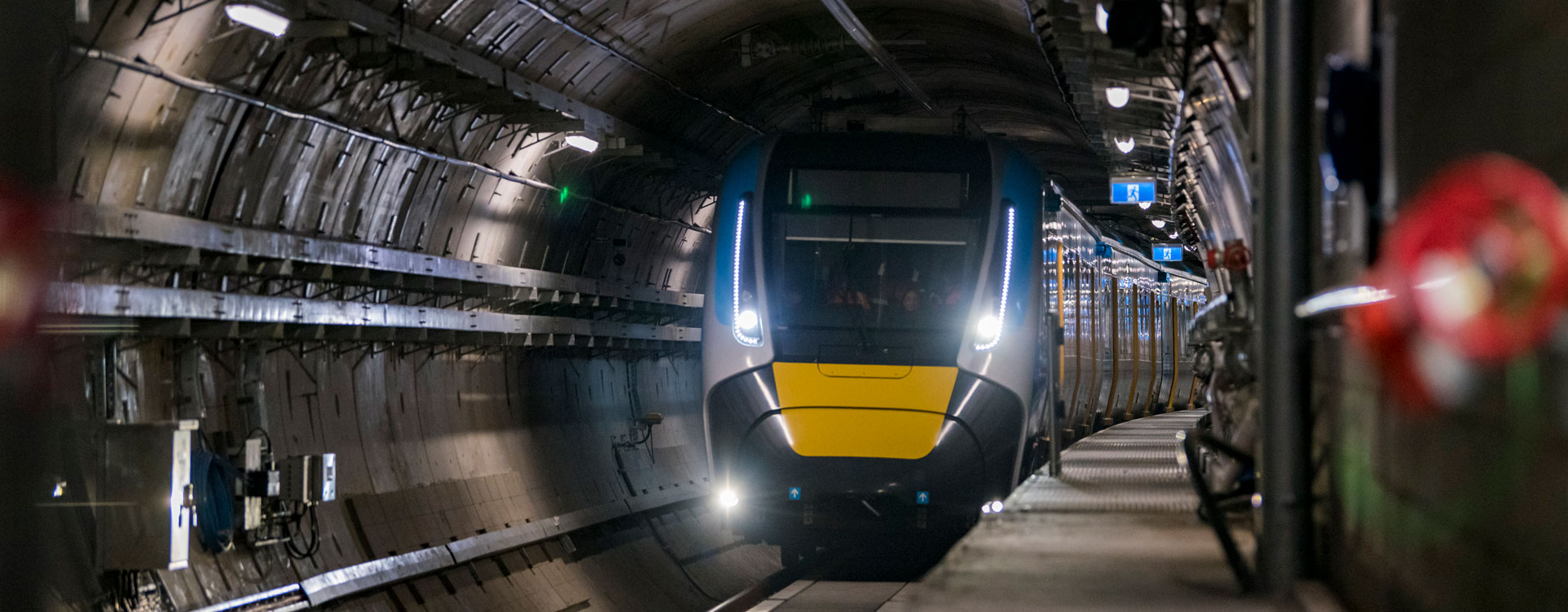
Melbourne’s much anticipated Metro Tunnel Project recently hit two significant milestones when two test trains successfully entered the Metro Tunnel and reached the 80km/maximum operating speed.
The Metro Tunnel is Victoria’s biggest rail project since the City Loop. Once complete, it will be a huge benefit to the Melbourne community as it increases peak period rail capacity by up to half a million people.
The test trains entered the twin 9km tunnels at the Metro Tunnel’s South Yarra entrance and travelled 1.7km to Anzac Station, directly under St Kilda Road. Importantly, the trains safely travelled at their targeted speed between the five metro stations.
Alex Kremin, Zone Lead – Domain and Eastern Portal and WSP Associate – Structures, was on site to see the test trains in the tunnels at Anzac Station.
“It was amazing to see”, he says. “It really hit me that the project is evolving from a building site into a working train line!”
The Metro Tunnel Project will transform the way people move around Melbourne. It will be a gamechanger for residents and visitors alike, increasing train services across Melbourne and reducing travel times by running the busy Cranbourne, Pakenham, and Sunbury lines underground.
The successful milestones demonstrate WSP’s world-leading technical expertise and excellence in delivering landmark projects that maintain their focus on the community’s needs.
Adam Farr, WSP Project Manager and Principal Geotechnical Engineer, says, “This is a flagship project for Melbourne that will permanently improve people’s commute by increasing key train lines’ capacity in several suburban growth areas.”
Cross-business collaboration
WSP, in a design joint venture with Arcadis and Arup (AAW), is working as part of the Cross Yara Partnership Design & Construction joint venture (led by Lendlease, John Holland and Bouygues Construction), to deliver a range of cross-business services, including:
-
Tunnels
-
Civil
-
Structures
-
Project Management
-
Geotechnical
-
Surface transport
-
Rail
-
Mechanical
-
Traffic
-
Electrical
-
Hydraulic design
WSP is also delivering specialist services – digital tools, tunnel ventilation, fire and life safety, land planning and environment, facades, security and blast assessment, pedestrian modelling, acoustics and vibration, and environmental and sustainability services including contaminated land management.
The project has involved nearly every corner of our business, with the AAW engaging the expertise of around 1000 people to date. This is a testament to the sheer scale and significance of the project in bringing value to a modern Melbourne.
Currently, in the construction phase, we are delivering fire and life safety certification inspections over the coming six months.
Designing for community
WSP understands the importance of building relationships with local communities and operating openly and transparently, building social value in areas where we work. For example, the Digital Solutions team also developed the Melbourne Liveability Monitor – a cloud-based Internet of Things (IoT) monitoring platform, which analyses data from sound, vibration, and air-quality sensors. It alerts managers to potential impacts on surrounding communities so we can mitigate them.
We relied on pedestrian modelling to create an efficient and reliable public transport journey for commuters. We analysed various travel characteristics such as walking speeds, routing patterns, and passenger behaviour to resolve crowd flow movement problems, including overcrowding and delays.
We also used sustainable materials (glulam and cross-laminated timber) to design Anzac Station’s landmark entrance.
The best news? The Metro Tunnel Project is now expected to be complete by the end of 2025 – a year ahead of schedule.
Read more about our role in the Metro Tunnel Project here.