A sustainable solution
With a continually growing population and already being one of the largest re-users of recycled water, the City of Gold Coast required and upgrade of the existing recycled water release system at the Southport Seaway. The project solution included a pipe capable of transferring 6,300 l/s of recycled water from the mainland across the Broadwater seaway via a marine pipeline to an outfall located off South Stradbroke Island.
The Gold Coast Seaway project is part of the City of Gold Coast’s Long Term Recycled Water Release Plan.
In order to protect the waterways from environmental impacts, an alternative construction method to the original dredged pipeline plan was proposed by the builder John Holland and their specialist subcontractor Bothar Boring and Tunnelling Australia (Bothar). This alternative adopted trenchless construction using micro tunnelling (MTBM) methods.
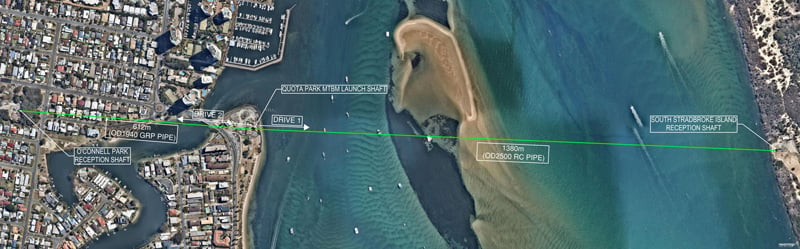
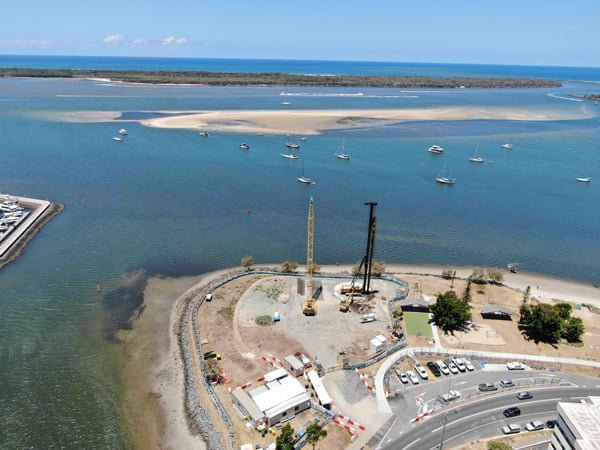
The project involved tunnelling two separate drives, the first is one of the longest micro tunnel drives in the southern hemisphere, a 1385m length of bored tunnel beneath the Broadwater Seaway between Quota Park on the mainland and South Stradbroke Island. It included the construction of two deep shafts and a 2.5m reinforced concrete carrier pipe that was installed with pipe jacking techniques.
The second drive involved a trenchless 617m crossing between Quota Park and O’Connell Park, including a section beneath Biggera Creek that was constructed using pipe jacking and micro tunnelling using a 1940m glass-reinforced plastic pipe.
The WSP (Golder) team was engaged by Bothar to join the project team and provide temporary works design support, design services for the tunnelling works, construction support that included site attendance across both drives.
The project ground conditions were challenging, consisting of 15m to 20m of saturated sand, overlying weathered bedrock. The reception shaft of the first drive is located on South Stradbroke Island near the shoreline. The environmentally sensitive setting, difficult geology and logistical challenges associated with the island setting made for a challenging project. This required numerous innovative ideas, robust design solutions and active solving of engineering problems as they arose on site.
Traversing difficult terrain
Our Future ReadyTM approach centred around safe and constructible design solutions, environmental and sustainability outcomes, whilst also adhering to tight project programme constraints.
As part of the initial scope, the team carried out a review of the anticipated ground conditions based on existing geotechnical investigation data. This included providing advice on key geotechnical risks and data gaps. An important part of the works included the interpretation of geotechnical parameters and design water levels. These served as the basis of design for shafts that were constructed across the sites.
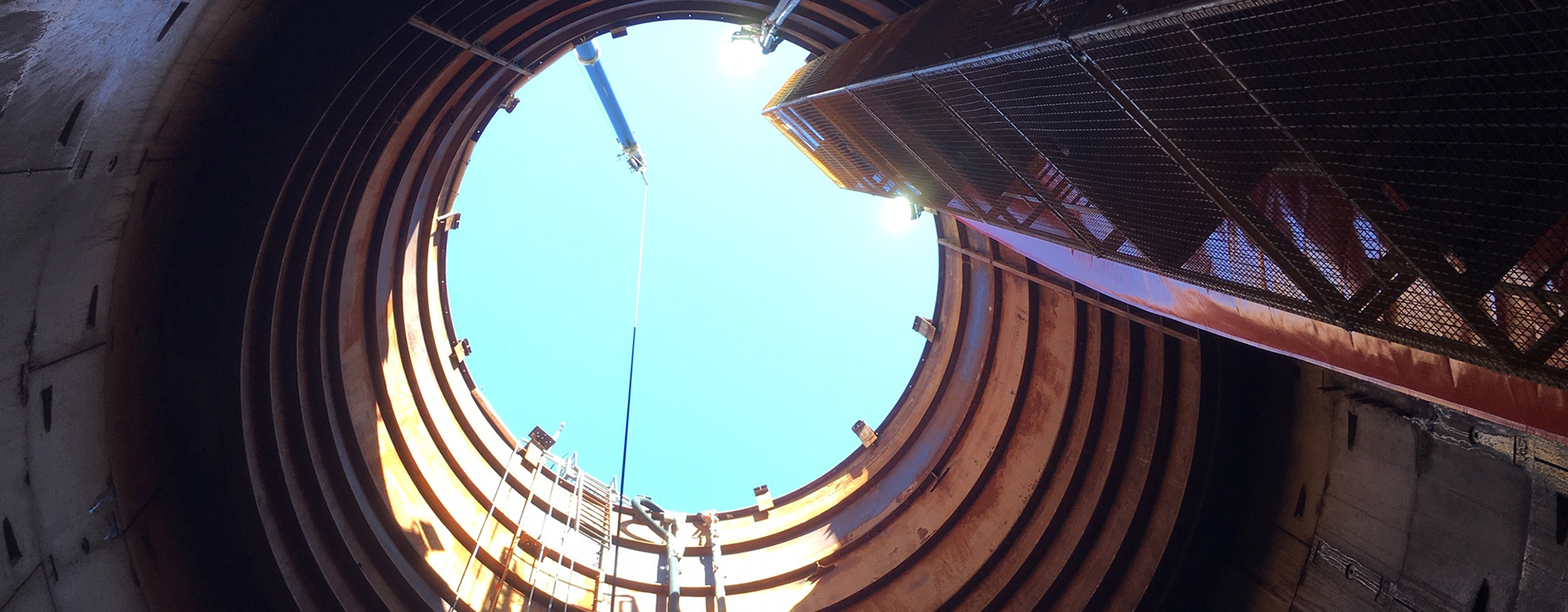
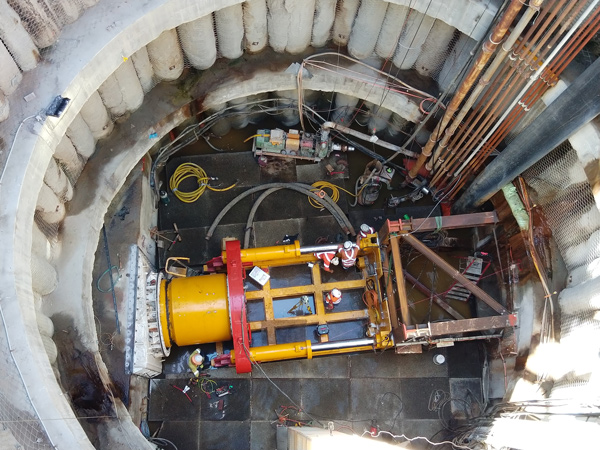
At Quota Park, we verified the MTBM launch shaft design. This 22.5m deep shaft located next to the ocean and impacted by a large groundwater head pressure of around 2 bar (200 kPa) and a tidal, storm prone coastal environment made this structure an engineering challenge. The team took over the certification and completion of the design works relating to the temporary work elements, such as ring beam, base slab, as well as shotcrete and mesh design, to ensure the safety of people working in the shaft. We also assisted with the rectification design of the shaft ththat included installing a jet grouted curtain wall around the perimeter to eliminate excessive groundwater ingress.
At South Stradbroke Island the team designed a segmentally lined temporary shaft that is 22m deep, having similar high groundwater pressures to the launch shaft design. The shaft was constructed using a wet jacked caisson methodology. This method allowed the construction team to create a safe and robust structure for retrieving the MTBM and completing the permanent works within the shaft. This methodology is relatively rare in Australia, but considering the challenging ground conditions in saturated sandy soils, remoteness of the island, limiting the concrete pours and watertightness requirements, this solution was considered well suited.
The team prepared a geotechnical long section and provided assistance with the interpretation of tunnel ground conditions across both alignments. As part of the works, slurry MTBM face pressure calculations were undertaken. Additional technical assistance was provided for the second tunnel adrive, including tunnelling settlement predictions, interjack locations and jacking force calculations to facilitate pipe stiffness class selection.
We also provided detailed design of all temporary works associated with the job including geotechnical, structural and tunnelling across both drives. The use of digital engineering has proven pivotal on this project for both geotechnical and structural components.
Valuable outcomes
There were multiple simple and smart solutions that were adopted on site. One example included maximising the use of local sands and minimising importation of crushed rock to the island. This was accomplished by using a sand infilled cellular (geocell) reinforcement for haul roads and hardstand support, which improved the project environmental outcomes.
Overall, our design solutions have enabled our client to satisfactorily complete this complex and challenging project. Although challenges did arise during the first drive, these were met and collectively solved in a collaborative fashion.
The learnings for the first drive were then applied to the second drive that was completed in a smooth and timely fashion.
By changing from the original dredged pipeline option to a micro tunnelling solution, potential impacts on the delicate marine environment of the pristine coastal setting was avoided.