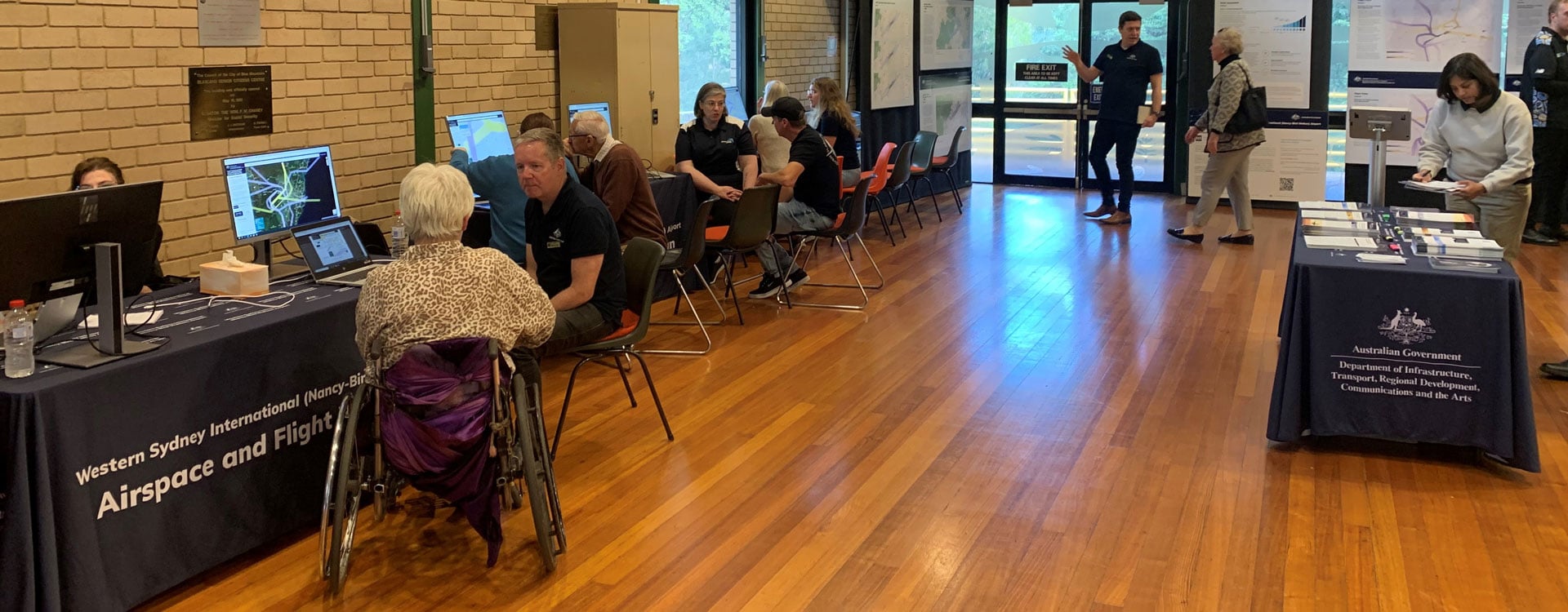
WSP supported the government in seeking input from participants across Western Sydney, the Blue Mountains and metropolitan Sydney in proximity to the flight paths, as well as those with shared interests such as aviation, tourism, business chambers, environmental organisations and peak organisations. We prioritised the most heavily impacted and those who may have a barrier to engagement, and worked with local groups and government representatives (including the Forum on Western Sydney Airport, (FOWSA)) to design a participation process that responded to the unique, diverse community and stakeholders.
Engaging with diverse communities and First Nations peoples
The communities affected by the preliminary flight paths are extremely diverse, with significant numbers of people for whom English is not a first language. Collateral was carefully developed in plain language and simple graphics and translated into the most spoken languages in Western Sydney including Arabic, Hindi, Vietnamese, Simplified Chinese and Tagalog which ensured an inclusive community consultation program. In addition, translated versions of three informative animated videos were produced and made available online.
More than 13,500 Aboriginal sites and places were identified in the Aboriginal heritage study for the project across Western Sydney. Our team met with First Nations knowledge holders and stakeholders to understand cultural values, Aboriginal places and concerns about the potential impacts of the project. This included more than 120 interactions over phone, email, virtual meetings and face-to-face meetings with First Nations people and organisations.
Engagement techniques and communication methods
From survey research, we determined the communities’ communication and engagement preferences. We provided information in a variety of media, including face-to-face, digital, printed brochures, animations and visual imagery. We used a range of traditional techniques to communicate, to take people on the journey, and to simplify the complex. This included an innovative, award-winning Aircraft Overflight Noise Tool created by To70 to help people better understand how they would be affected, as noise can be experienced differently by different individuals. The tool included location-specific impact summaries, 3D visualisations of flight procedures and noise impacts.
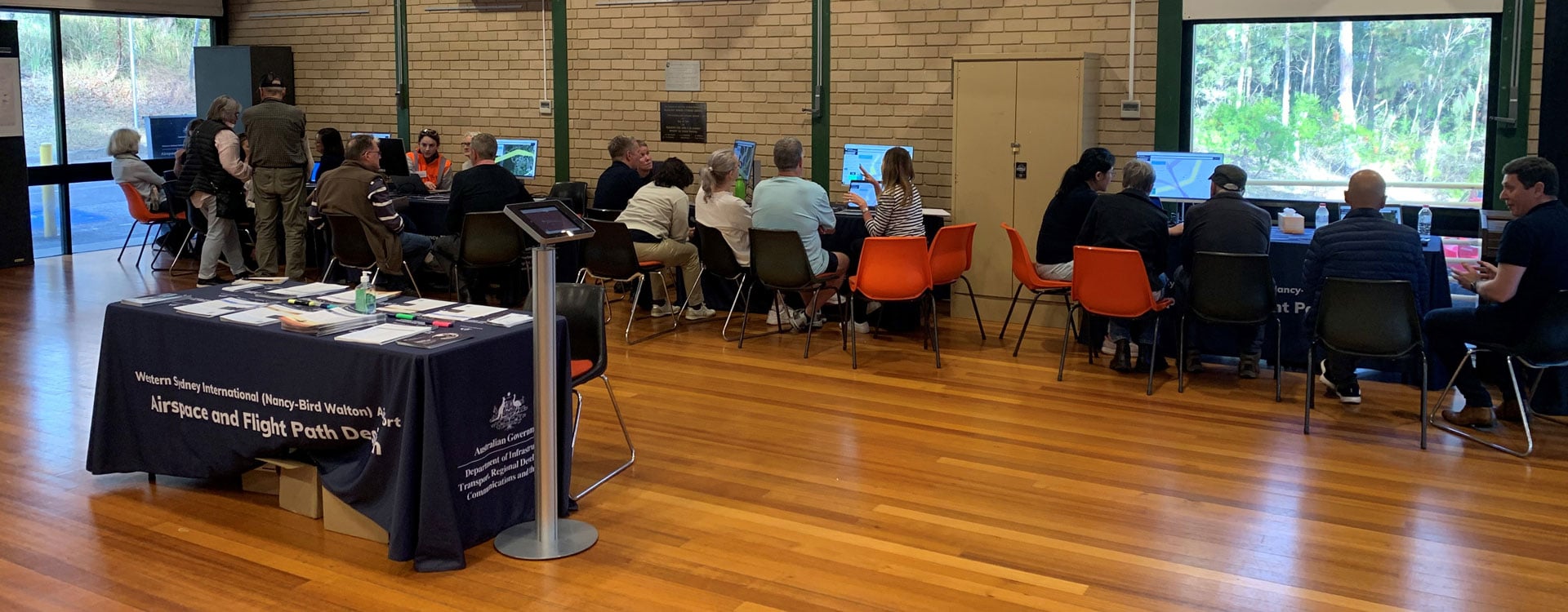
In total, we achieved:
-
30 community information and feedback sessions with 1,300 participants
-
45 community information stalls with over 4,400 visitors
-
124 properties doorknocked
-
4,300 flyers handed out at 21 train stations
-
letterbox drops to over 900,000 properties
-
218,000 social media post impressions
-
over 460,000 Online Community Portal visits
-
over 331,000 Aircraft Overflight Noise Tool visits
-
over 8,400 submissions received on the draft environmental impact statement (EIS)
-
briefings with stakeholder and community organisations, state and local representatives, and government organisations
-
research focus groups held in language to review and seek feedback on collateral developed
-
engaged with 13 First Nations groups
-
a community 1800 number and project email.
Shaping the future
The WSI Airspace and flight path design project is a once-in-a-generation engagement project. It would be difficult to find another project with the same breadth of engagement area and the same level of complexity of information.
By spending the time, resources and energy to provide the public the opportunity to learn, we increased the community’s understanding of the project and empowered them to make considered submissions. This has maximised the communities’ ability to influence the final flight paths and aircraft movements and take an active role in shaping the future of air travel in their area.
Contact our experts below, or click to find out more about our Aviation services and our role as Independent Certifier for Western Sydney International (Nancy-Bird Walton) Airport.