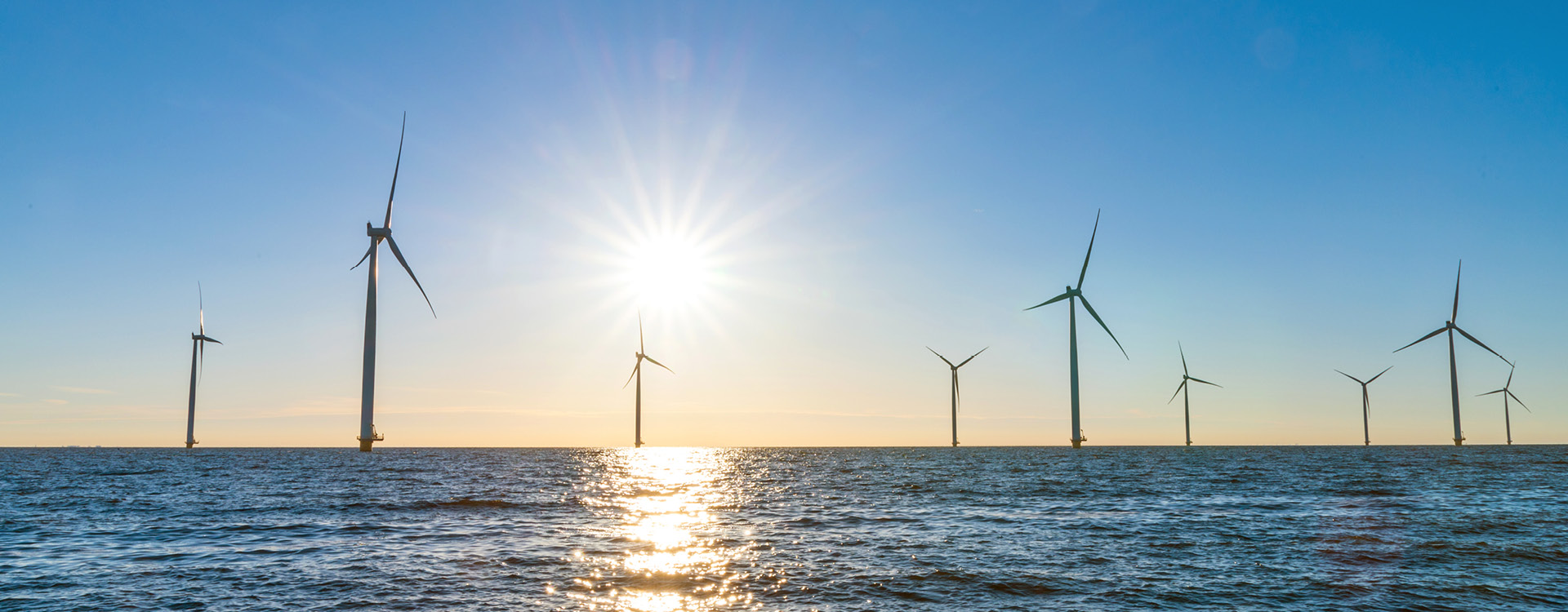
Australia’s offshore wind industry is at an exciting stage of opportunity and progress. The sector has strong momentum, government support, and is maturing rapidly. However, developing an offshore wind farm takes many years and demands a significant investment of capital and resources. Obtaining a feasibility licence, which gives a developer seabed exploration rights, is a crucial first step in the process, but with so much more to do once a licence is in hand, what are the areas to focus on now to keep projects in motion?
Recently, some of our specialists sat down with leaders in government, planning, and ports – we spoke with Anh Mai, Victoria Department of Energy, Environment and Climate Action’s Executive Director of Offshore Wind Energy Victoria, Peter Watt, Port of Hastings Corporation’s Engineering Manager, and Jeff Lynn, Ashurst’s Partner, specialising in environmental, planning and climate change law – to discuss some of the critical factors at play in moving projects towards feasibility and final investment decision.
In this article, James Perry, WSP’s Principal Engineer in Offshore Wind, and Holly Love, National Director of Communications and Engagement, share their reflections on the opportunities, risks and considerations arising from the discussion that will be vital to the success of an Australian offshore wind industry - and six areas of action we should focus on now.
Having been involved in the design, fabrication, transport, and construction phases of three offshore wind farms in the UK, James Perry, has a wealth of insight to offer Australian offshore wind proponents at this early stage of projects.
“These are exciting times for the wind industry in Australia,” he says. “We’re seeing strong support from state and federal governments that brings both stability and momentum, which makes Australia a great place to be investing in offshore wind.”
Anh Mai brought a similar enthusiasm to the discussion, noting that state and federal government commitments to net zero are driving significant spending in renewable energy and strong recognition of the strategic role of offshore wind to complement onshore resources.
“If we can start well,” she says, “we will build good momentum. This is an industry full of hope and support. If we go with the momentum, the roll out is sure to gather speed.”
Six recommendations to progress the wind energy agenda
1. Plan now for supply chains, resources and skills
One of James’s top-of-mind considerations is ensuring that knowledge, resources, and personnel are available in an increasingly competitive environment.
James says, “From a resources and skills perspective, competition is fierce at the global level so the Australian industry will need to establish the teams, resources and specialist knowledge required to deliver offshore wind projects rapidly.”
He recommends that proponents of offshore wind farms in Australia keep their eyes on the long-term horizon as they undertake their risk processes and build a strategy to begin addressing risks to securing future success.
“I recommend doing a backwards risk process,” he says. “In other words, work backwards through a project to identify risk and uncertainty – whether that’s in the availability of engineers, or access to specialised equipment or expertise. The purpose of this process is to identify what’s on the longer-term horizon, so these factors can be worked on in parallel when you’re chasing more immediate milestones, and don’t become blockers down the track.
“Later stage of the project will be far smoother if the work is invested upfront in identifying the uncertainties, developing a detailed strategy and plans, and locating the best sources of expertise and the key stakeholders.”
2. Stagger projects and prepare infrastructure for an orderly roll-out
For the Australian offshore wind industry to be successful and sustainable, it needs the right level of activity over a sustained period.
James explains that the UK experience where many projects were underway at once, followed by a hiatus – was immensely challenging for some parts of the supply chain that could not sustain activity from one project to the next.
“Our panellists agreed that the sector will need to consider ways to access the necessary equipment, resources and knowledge at the right time,” says James, “which will call for a degree of collaboration and optimisation of project schedules.
“We need to ensure that port infrastructure becomes an enabler rather than a limiting factor for the many potential upcoming projects in Victoria,” he says, “and there will be a need to stagger projects into an orderly pipeline to secure good relationships with turbine suppliers.”
Peter Watt agreed that ports will need to carefully plan how to navigate the ebbs and flows of capacity and revenue. Given the approximately 20 years between the early surge of construction and the late flurry of repowering or decommissioning, ports will need to be ‘right-sized’ to meet the intense but periodic demands of the emerging industry, keep environmental impacts and capital costs within reasonable limits, and futureproof against obsolescence as offshore wind technology continues to evolve.
“We’ll be working closely with government to make sure our port is able to support what the government and industry need so that the roll out is orderly and the industry can maintain momentum,” says Peter.
“As the feasibility applications come in, we’ll see what ports need to come into play,” he says. “Although a government-owned port gives more certainty, it will certainly be worth considering more port collaboration between government and private industry - so private ports will need to get the offshore wind sector onto their priority list.”
3. Bolster revenue certainty - a role for government?
It’s clear that there’s a significant role for governments at all levels to support the emergence of a new industry to achieve their policy objectives for the decarbonisation of the energy sector.
Our panellists agreed that revenue support will be crucial in the initial stages of offshore wind projects, with their exceptionally large scale and capital costs.
“Revenue certainty underpinned by government will encourage counterparties to contract with wind developers to bring projects to fruition,” says James. “How Contract for Difference’s are designed and sized will be a critical gateway through to final investment decision, and will play a large role in the number, size and timing of projects.”
4. Encourage sector-wide collaboration
Our panellists saw potential for governments to encourage or facilitate industry collaboration and cooperation in areas that would benefit from a sector-wide approach.
Yet, as Anh Mai noted, the starting point must be an industry-based appetite and commitment to collaboration rather than top-down interventions from government.
James says, “There is inevitable competition between project proponents during the race for limited feasibility licences, but after these licences are awarded there’s potential for collaboration to build critical mass and realise shared economic benefits.
“The challenge is whether we have time in our pipeline for this to occur naturally, or whether we need more interventionist mechanisms to kick-start genuine collaboration on issues that affect the whole industry.”
5. Continue to engage with communities and build social licence
With such long timeframes for offshore wind projects, and it being a new industry in Australia, there are many opportunities and challenges ahead to build social licence in the sector.
Holly Love is a passionate advocate for participative community engagement processes that uncover the full range of community concerns, risks and opportunities, and carefully manage community expectations.
“Our panellists all agreed that managing community expectations and building social licence is critical to the success of an emerging Australian offshore wind industry,” she says. “The panel reiterated the need to engage early and often, with honesty and transparency, so that a trusting relationship can develop with all those who will be affected by the project.
“Jeff Lynn made some excellent points about the need to identify the right stakeholders from the start, and to engage sufficiently early that the results of stakeholder feedback can be reflected in the design approach,” says Holly.
“He identified that there’s a much higher and more sophisticated standard being applied to community and stakeholder engagement now, with an expectation that project proponents build a genuine, long-term social licence rather than taking a compliance-based or tick-the-box approach.
“It was also heartening to hear our panellists reinforce the importance of engaging with Traditional Owners to understand their views and concerns and identify ways in which offshore wind projects can partner with Aboriginal communities to deliver lasting benefits,” says Holly.
Another focus was the importance of managing community expectations relating to local jobs and local content.
As James explains, “We all want this industry to deliver jobs and economic benefits for regions, but we need to be careful about messaging and managing expectations about what makes sense to build here and what will remain viable in the longer term. I have seen this go wrong in the UK, where the local content simply couldn’t compete in quality and cost with an international product – and couldn’t be made to work despite being in a mature market with a mature pipeline.”
Community engagement was identified as an area that could benefit from government leadership to define expectations. Industry-wide collaboration was also seen as key to building the public’s understanding of the technology, the project process, and how offshore wind contributes to the vision for a net zero future.
As Anh Mai articulated, many stakeholders will not differentiate between parties who are engaging well or poorly, so any suboptimal performance in this area could undermine the sector as a whole in the community’s eyes.
6. Learn from international examples
James recommends that offshore wind proponents, governments and other industry participants look to international examples to identify success factors and learn from past lessons.
“In Australia, we’re dealing with projects that will be the first of their kind in our waters,” he says, “and there is so much we can learn from the roll-out of offshore wind in Europe and Asia, where offshore wind is much more established.
“WSP can leverage our international offshore wind experience in the UK, US and Taiwan for the benefit of our Australian clients.
“In the face of the huge competition in this industry, we need to make the Australian offshore wind industry a sector that can attract specialist expertise from other jurisdictions and be an industry of choice for Australians to work in.”
With more feasibility licences soon to be awarded, Holly and James are excited about the next steps for offshore wind projects, not just in Victoria but around the country.
“The six recommendations outlined here – that emerged from our recent panel discussion – are critical to the smooth progress of the offshore wind sector,” says Holly, “and it didn’t surprise us that there was so much consistency with previous discussions we’ve hosted, especially around the primacy of community engagement, collaboration and supply chains.
“We’re confident that if the sector maintains its focus on these key factors, we’ll find a smoother path towards getting these important projects up and running without unnecessary delay, to be Future Ready™ to enable our clean energy transition and net zero aspirations,” she says.
For its part, WSP has committed to halving the carbon footprint of its designs by 2030. This demonstrates our commitment to supporting our clients’ transition to cleaner energy through renewable energy options like offshore wind.
For more information, please contact us.
To stay up to date with our latest information, publications, videos and posts, please subscribe to our news and follow us on LinkedIn.